
Project Description

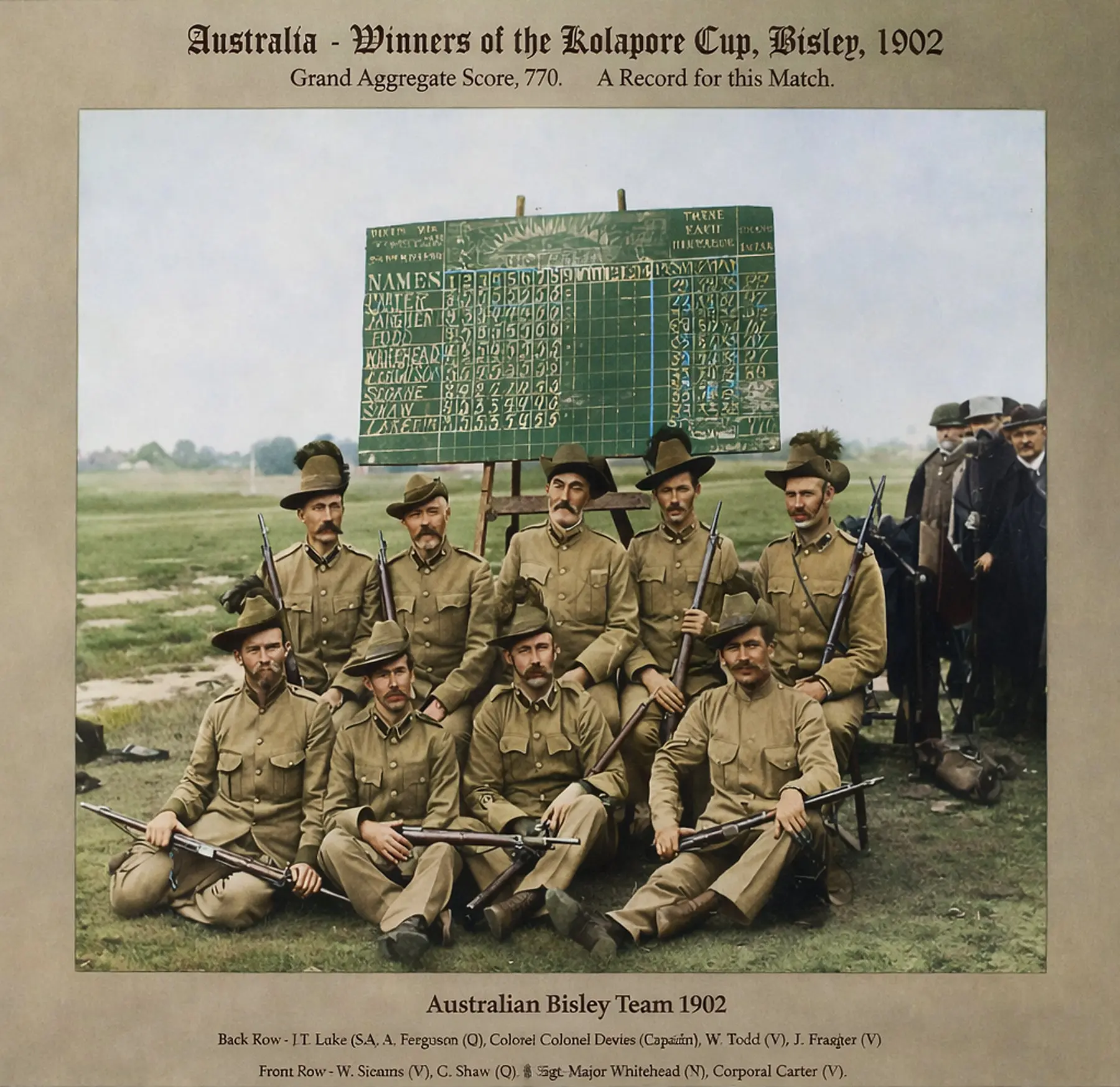
Kolapore (Bisley) Cup 1902 – Australia Colonial Team – World Championship Shooting
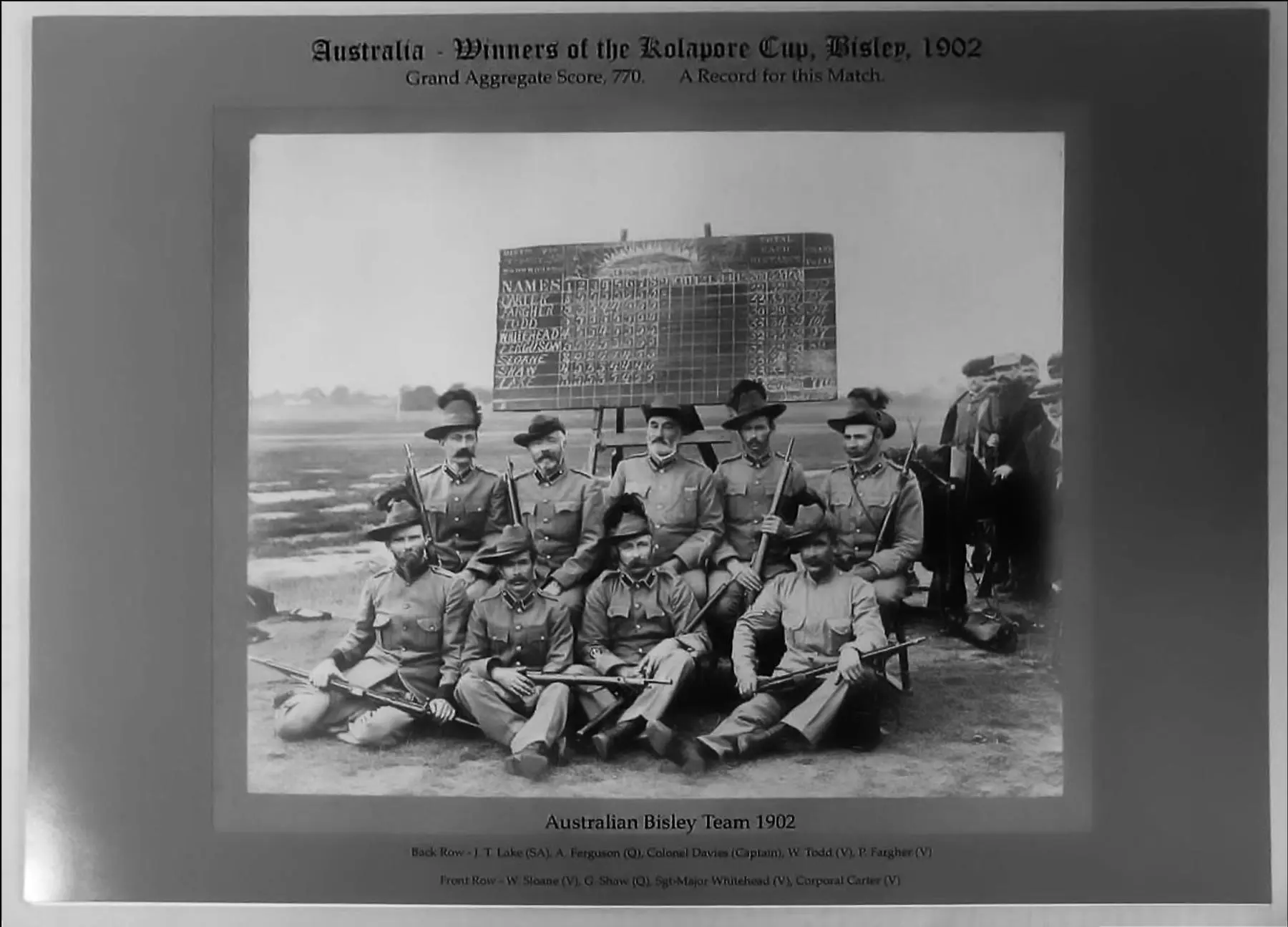
Attribution: https://collection.australiansportsmuseum.org.au/objects/17805/sepia-photograph-australian-bisley-shooting-team-1902-kolapore-cup
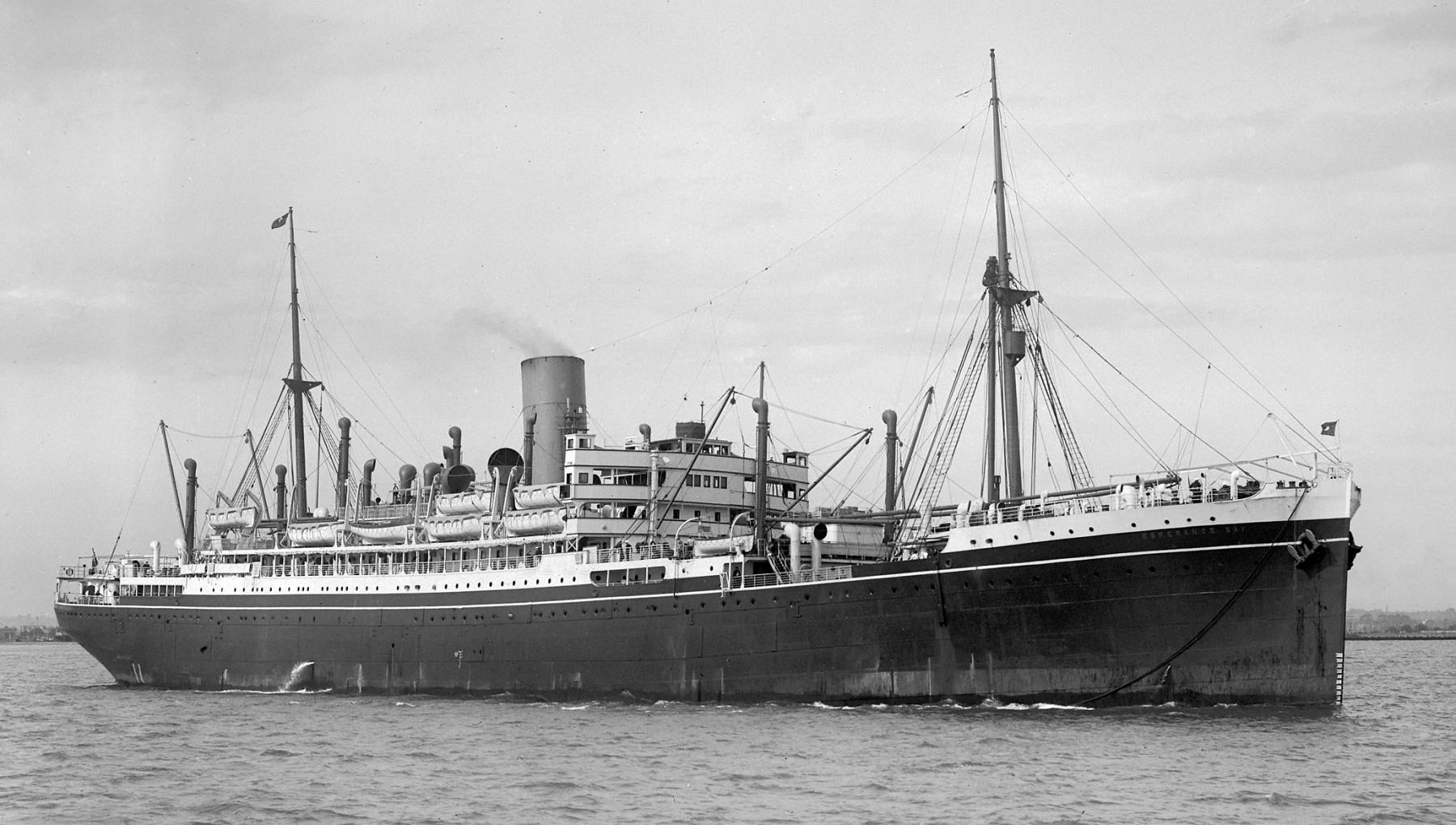
G Shaw – second from lower left. My great grandfather looks significantly thinner in the photo. I gather the long voyage by ship from Australia to England could have been 3 months in 1902. Faster ships with third class (not clippers or steam) 40-50 days, and challenges to health. I have shown a couple of Commonwealth Liner types of ships below to give an idea. More info at: https://museumsvictoria.com.au/immigrationmuseum/resources/journeys-to-australia/
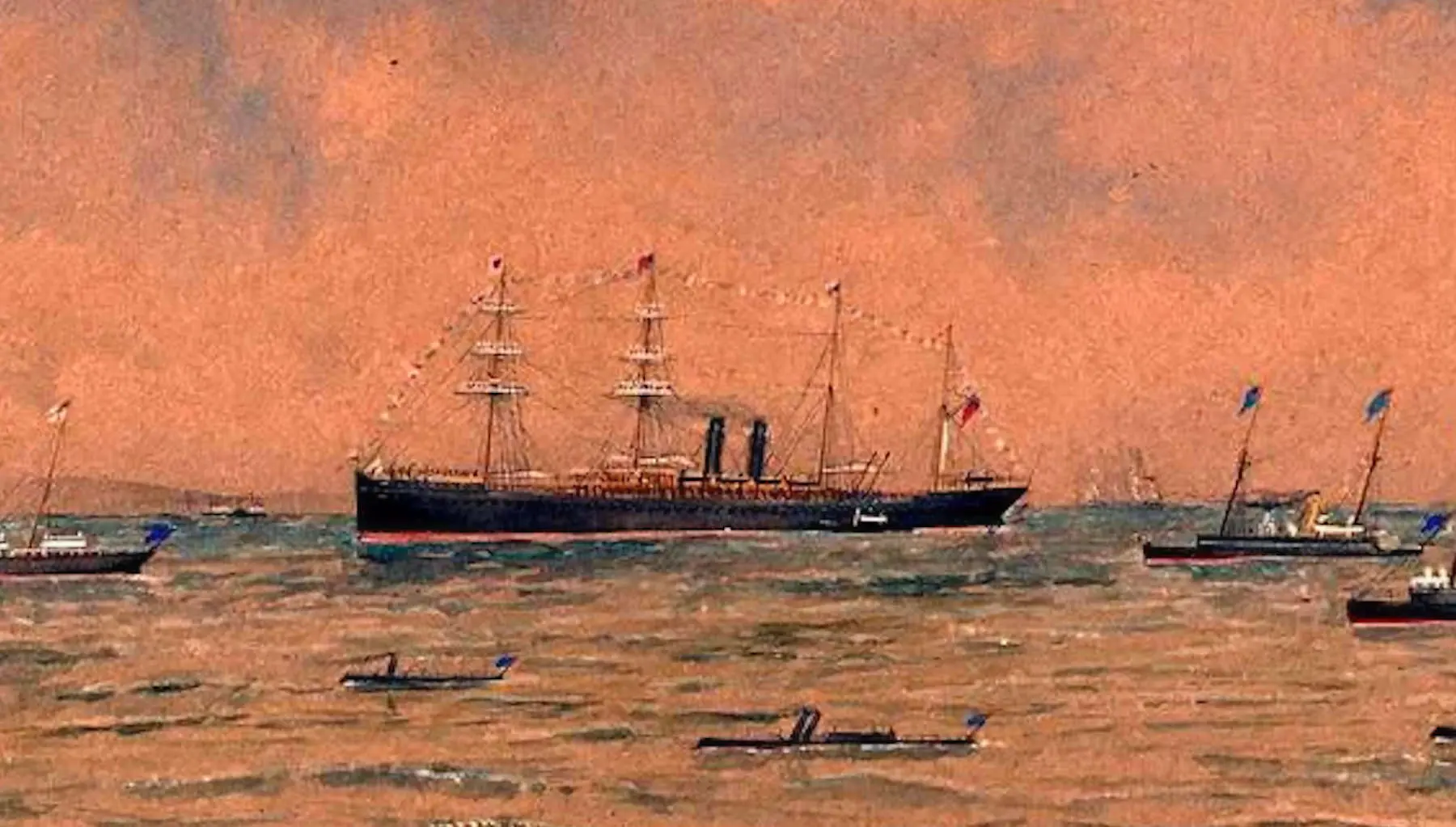
One ship used in 1907 was the R.M.S Rome.
G. Shaw (Q) refers to: Quartermasters, responsible for managing the supply and logistics of the army, including uniforms, equipment, and other essential supplies. He moved from Private, to Sergeant, to Lieutenant. I am unable to find service records for Brisbane or via Canberra.

Mobile images not displaying? Please disconnect VPN

SIT PERPETUUM

Here is an extract from “National Rifle Association of Australia 1888-1988” reference:
The-Riflemen-A-History-of-the-NRA-of-Australia-1888-1988.pdf

Regarding the new membership of George Shaw in 1906:

A new delegate at the meeting was George Shaw. English-born Shaw was one of Queensland’s best rifle shots – he represented Queensland several times in Federal and Commonwealth Match teams, had won the State associations’ ‘Queen’s’ and ‘King’s’ three times in succession from 1899, and represented Australia at Bisley in 1902 and 1907.

Commonwealth Council of Rifle Associations 1901-1920 / Delegates /
Queensland

In the early years, there was a strong separation between northern and southern Ireland, (the “troubles”) with people registered as English in the United Kingdom – although technically born in Northern Ireland.

Kolapore (Bisley) Cup 1902

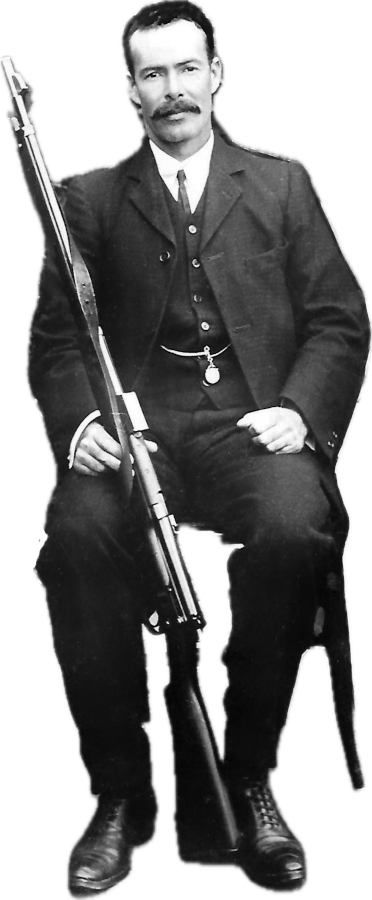
Thank you for sharing it — this is a fantastic early 20th-century portrait. I’ll break this down into three areas: the rifle, the retouching, and whether it fits a 1907 Bisley competition context.

1️⃣ The Rifle

From what’s visible:

Key Features I Can See

  • Long barrel (appears full-length military pattern, not a carbine)
  • Full wood stock to near the muzzle
  • No visible charger bridge on the receiver
  • Early pattern nose cap
  • Long rear sight mounted forward on the barrel (not receiver-mounted)

Assessment

This configuration is consistent with a Lee-Metford long rifle (Mark I or II pattern) rather than a later Short Magazine Lee-Enfield (SMLE).

Important detail:

  • By 1907 the SMLE Mk I was standard military issue.
  • However, Lee-Metfords were still widely used in civilian and competitive shooting, especially at Bisley.
  • Many competitors preferred earlier long rifles for target work.

Based on the visible length and sight placement, it is entirely plausible this is a .303 Lee-Metford long rifle.

A close-up of the receiver area would confirm definitively, but nothing here contradicts that identification.

2️⃣ The Retouching & Hair Darkening

You were absolutely correct — this image has clearly been hand-retouched.

Visible Signs of Manual Adjustment

  • The background shows obvious brush-like strokes.
  • The foliage appears painted rather than purely photographic.
  • There is tonal smoothing around the head and shoulders.
  • The hair appears darker and more uniform than natural texture would suggest.
  • Slight halo effect around the subject.

This is classic early 1900s studio retouching.

Why Hair Was Darkened

This was extremely common because:

  • Early photographic emulsions did not render lighter hair well.
  • Grey or light brown hair could appear washed out.
  • Retouchers darkened hair for contrast and definition.
  • Dark hair reproduced better in print.

The texture of the darkened hair in your photo looks like period pencil or brush work on the negative or print, not modern repainting.

There is no sign of modern paint overlay — the tonal integration looks original and consistent with silver gelatin portrait retouching of the era.

3️⃣ Does This Fit 1907 Bisley?

Everything about this portrait fits the period:

Clothing

  • Edwardian suit with waistcoat
  • High-collar shirt and tie
  • Pocket watch chain
  • Heavy leather boots

This is very typical of a civilian rifle competitor.

Pose

  • Formal seated portrait with rifle displayed prominently
  • Rifle positioned upright for emphasis
  • Studio background (painted foliage scene)

Bisley winners and serious competitors frequently had formal studio portraits taken.

4️⃣ Authenticity Assessment

Nothing in this image suggests later tampering.

What I see is:

  • Original early 20th-century studio portrait
  • Period-appropriate retouching
  • Rifle consistent with Lee-Metford long rifle
  • Styling consistent with 1905–1910 England

The manual painting is not suspicious — it is typical and expected.

5️⃣ A Few Interesting Details

  • His moustache style is very Edwardian.
  • His posture and direct gaze suggest this was likely a formal commemorative photograph.
  • The rifle appears well maintained and competition-ready.
  • The long barrel configuration strongly supports a target-shooting context.

Final Impression

Based on this image alone:

It is entirely plausible that:

  • The photo dates to around 1907.
  • The rifle is a .303 Lee-Metford long rifle.
  • The hair darkening and background painting are original studio retouching.
  • This could very reasonably be a Bisley competition portrait.

If you’d like, I can also:

  • Zoom into specific rifle details and explain what to look for.
  • Help estimate which Mark variant it might be.
  • Help you research Bisley competition records from that period.
  • Comment on whether this looks like a prize-winner portrait specifically.

This is a remarkable family piece — and quite historically consistent with your story.

This is a very strong, detailed portrait — there’s quite a lot we can read from it. I’ll go section by section as if we’re “zooming in” together.

🔎 1️⃣ The Rifle (Closer Observations)

What stands out

  • Long barrel with full-length fore-end — consistent with a long rifle pattern rather than a short SMLE.
  • Front sight protector appears tall and narrow, more in keeping with earlier Lee patterns.
  • Rear sight mounted forward on the barrel, not receiver-mounted.
  • No visible charger bridge (which would strongly indicate SMLE).

Interpretation

This strongly aligns with:

  • A Lee-Metford long rifle (likely Mk I or Mk II pattern)
  • Or possibly an early Lee-Enfield long rifle, but the proportions lean Metford.

The rifle looks clean and well-kept — not a casual farm rifle. It presents as a competition rifle rather than field-worn military issue.

The way it is posed — upright, clearly visible, centered — suggests the rifle itself was important to the photograph.

🪑 2️⃣ The Chair

Zooming in mentally:

  • Simple wooden chair.
  • Turned legs.
  • No upholstery.
  • Narrow seat.
  • Studio prop feel.

This is very typical of early 1900s portrait studios. It is unlikely to be his personal furniture. Studios used neutral chairs that wouldn’t distract from the subject.

The proportions also suggest he is seated carefully for composition rather than casually outdoors.

3️⃣ The Watch & Chain

This is an especially nice detail.

  • The watch appears to be a pocket watch with Albert chain.
  • The chain runs across the waistcoat.
  • The watch fob is visible — possibly a medal-style drop or decorative fob.

This is very Edwardian middle-class attire. It suggests:

  • Respectability.
  • Pride in presentation.
  • Possibly a special occasion (such as winning a competition).

It does not look like a military-issued watch. It looks personal and formal.

If this was taken after a win, he dressed properly for the portrait.

🌿 4️⃣ The Ground & Background — Studio or Outdoors?

This is the most interesting question.

Upper Left Background

The foliage looks more natural than the right side.

However:

  • The brushstroke patterns across the entire background are visible.
  • The tonal blending behind his shoulders suggests painted enhancement.
  • The right side especially is clearly painted or heavily retouched.

The Ground

The ground looks textured like dirt, but:

  • There are tonal inconsistencies.
  • The light falloff looks controlled.
  • There is no natural shadow complexity.
  • The “soil” looks slightly flat tonally.

My conclusion:

This was almost certainly taken in a studio, using:

  • A painted backdrop.
  • Possibly some real foliage placed partially at one side.
  • A painted floor cloth or textured studio base.

Many Edwardian studios attempted to mimic outdoor garden scenes. This was extremely common.

It is unlikely this was taken fully outdoors. The lighting appears controlled and frontal.

🎨 5️⃣ On Colourization

Yes — it is absolutely possible to colourize this image.

But there are important considerations.

Would it damage facial features?

No — if done properly.

Modern digital colourization:

  • Adds colour layers non-destructively.
  • Does not alter original detail.
  • Can be done on a copy.
  • Can preserve all facial texture and grain.

The key is:

  • Avoid over-smoothing.
  • Avoid AI “beautification.”
  • Preserve original contrast and grain structure.

The Hair Issue

If his hair was originally lighter:

  • Colourization could restore a lighter brown tone.
  • The dark retouching might slightly limit subtle variation.
  • But careful work could soften the artificial blackness.

Clarifying the Rifle

Sharpening and clarity adjustments can:

  • Improve edge definition.
  • Slightly enhance metal/wood separation.
  • Increase contrast to show form better.

However:

  • No process can reveal detail that was never captured.
  • If the original print is slightly soft, enhancement is limited.

🧭 Overall Interpretation

This portrait reads as:

  • A formal studio commemorative photograph.
  • Likely taken shortly after a competition.
  • Carefully posed to emphasize the rifle.
  • Retouched in standard early 20th century fashion.
  • Fully consistent with 1905–1910 England.

Nothing appears modernly altered.

And I’ll say this — he carries himself with quiet confidence. This does not look like a casual photograph. It feels commemorative.

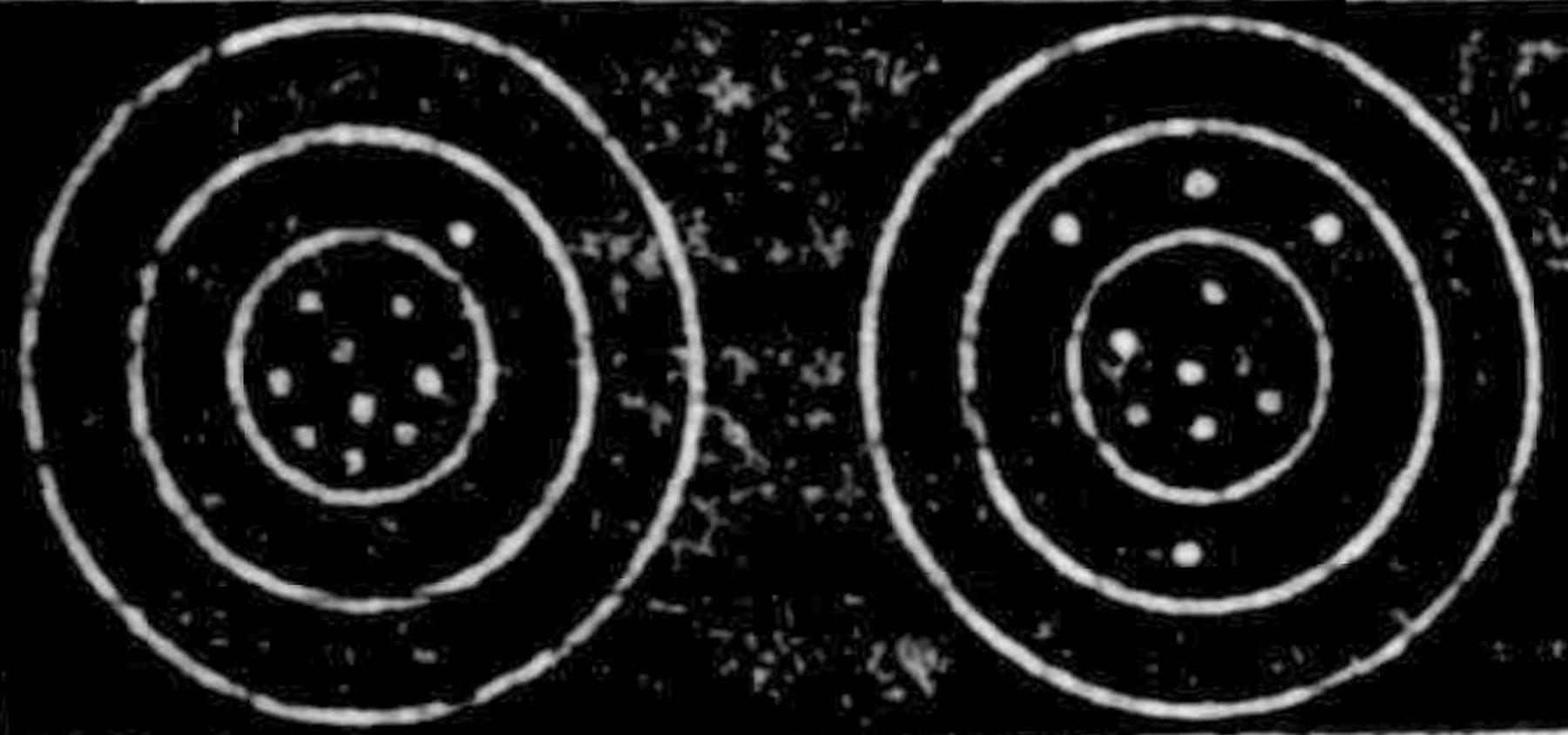
(1) These are the typical targets used by the marksmen with match rifles for distances such as 300, 500, 600, 700 and 900 yards. Rifles may have been given to the men for having won the competition. The rules of the competition vary over time. G. Shaw was one of the highest achieving champion shooters from the “colonial teams”.   Bisley 1902 used 7 shots at 200, 500, and 600 yards. Trove: https://trove.nla.gov.au/newspaper/article/211462079
(2-3) The types of ships between Australia and England – examples 1903, 1922. Slower ships up to four months.  On record, I was advised three months for Bisley by QRA.
Newspaper Article: https://paperspast.natlib.govt.nz/newspapers/EP19020724.2.38
For various images of Bisley see:
https://www.google.com/search?q=bisley%20cup%201902&udm=2&tbs=rimg:Cbt4zFSjgYw6Yb_1tYCRhTOLBsgIAwAIA2AIA4AIA&client=firefox-b-d&hl=en&sa=X&ved=0CBoQuIIBahcKEwjwopLHqsiMAxUAAAAAHQAAAAAQBw&biw=2078&bih=1047&dpr=2
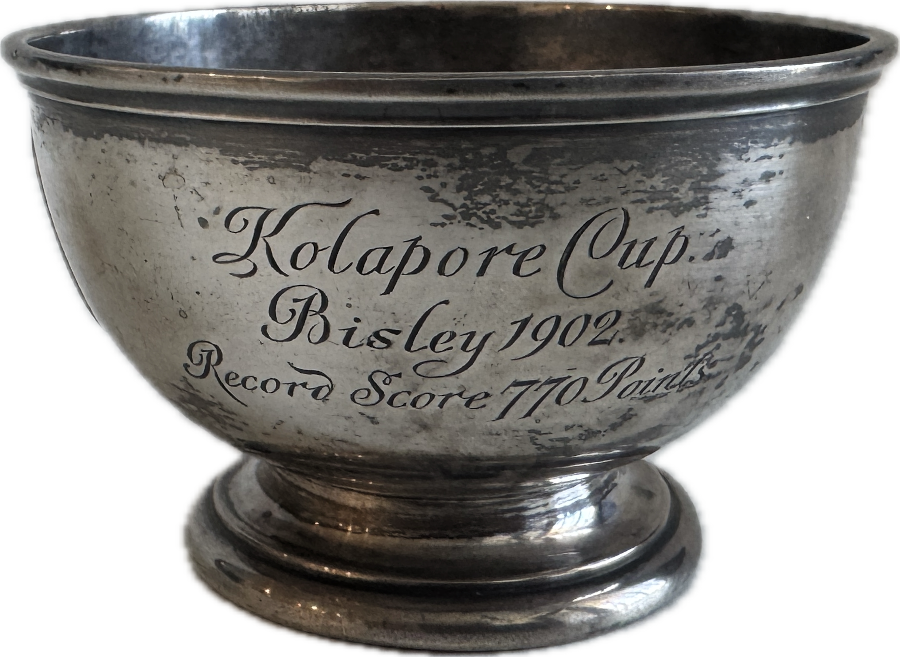
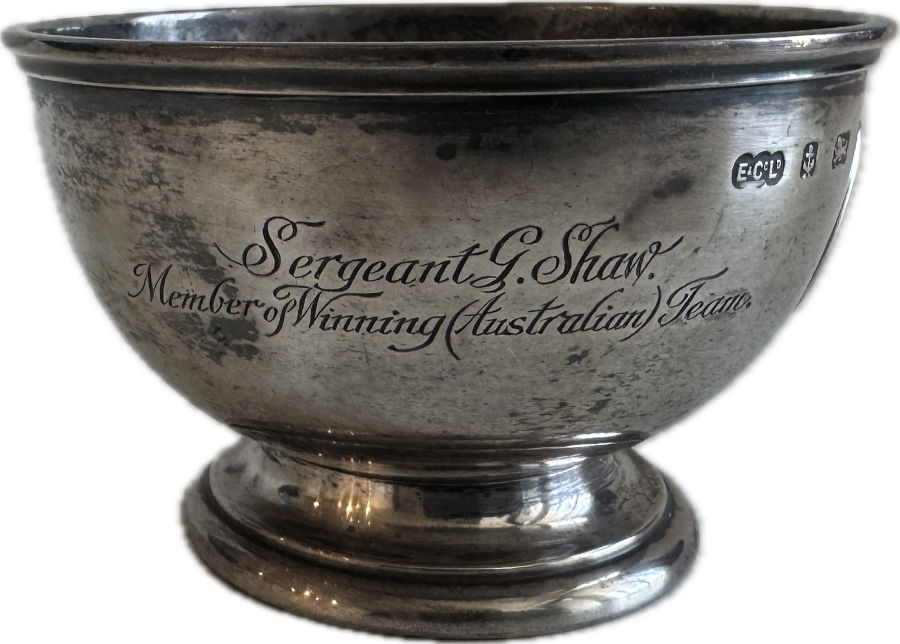
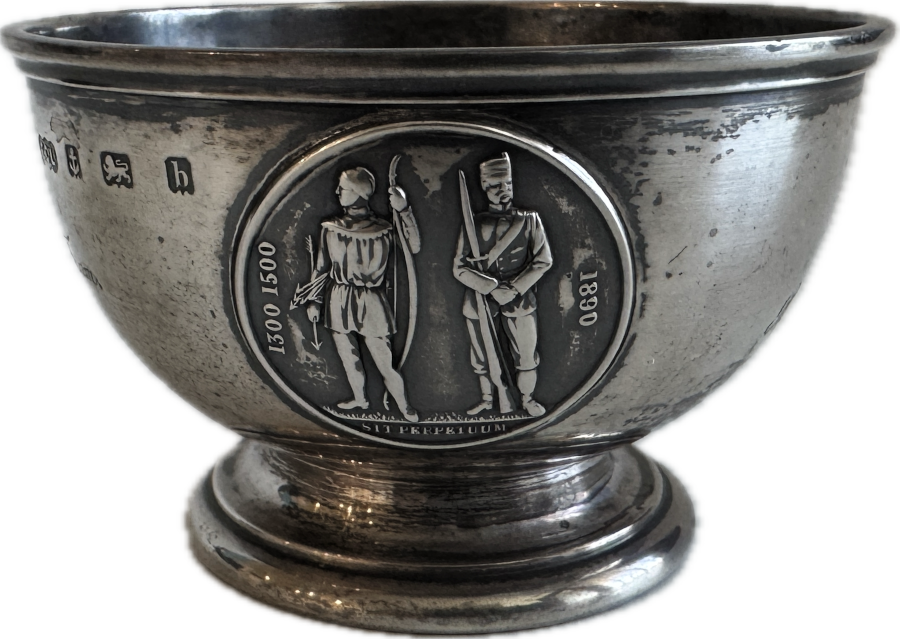
This silver bowl trophy was given to all the team members. For example, view William Todd’s award/trophy at:
https://collection.australiansportsmuseum.org.au/objects/17806/kolapore-cup-awarded-to-shooter-william-todd-1902

HOWEVER – notes received from NRA UK, email 9th July 2025
The bowl is genuine silver, at least 92.5%, and was made in 1907. It is not a Kolapore trophy. People would make souvenirs. The letter “h” means 1907, not 1902 when the competition was won.
The words Sit Perpetuum indicate a motto for enduring existence and co-operation (seems appropriate for Australia and England).

Here is the email:

Dear Laurie,

Your email of 25 April 2025 has belatedly arrived with us at the Museum of the NRA…

… The pictures of the silver bowl engraved with the legend “Kolapore Cup 1902” are not of the Kolapore Trophy itself, but of souvenir silver bowls bearing the NRA (UK) symbol of the bowman and the rifleman. The bowl also appear to bear a silver mark indicating Elkington & Co but the year letter “h” would be 1907: similar bowls probably of a later date were of a base metal. It is always possible that although Shaw shot in 1902 the bowl was purchased later and engraved retrospectively in 1907.

It has puzzled us because the lists of those shooting for Australia in that match in 1902 contain the name of a Private G Shaw, but in the Grand Aggregate for that year a Lt G Shaw was 18th. In 1907 there is mention of a Lt G Shaw in the Grand Aggregate at 26th. In 1907 he is listed as Lt G Shaw in the Australian Mackinnon team. We suspect that there is a simple error in the records of the time.

Curator, Museum of the NRA

NRA UK museum has advised me this was not a Kolapore trophy, that the “h” symbol from Elkington is 1907. Apparently, people would have souvenirs made, so this was made approx. five years after the 1902 event. I researched this as my great grandfather G Shaw was on the team and had the same “trophy” with his own name. I believe William Todd was the top shooter. The inscription under the bowl is indeed “FI KINGTON” followed by some further marks on our “trophy” that may be poorly hand made to indicate something that we cannot read correctly. I don’t know why FI followed by a space before KINTON is engraved. Perhaps an engraving mistake?
The Four Marks are:
(1) E&C[O]L[D] where [O] and [D] are uppercase superscript, contained in three oval shapes. (All references I have seen are two ovals without the Ld for the third oval shape.)
(2) An anchor symbol is the hallmark of the Birmingham Assay Office, indicating where the silver was tested and marked. (AI reference)
(3) Lion Passant: This hallmark, a passant (walking) lion, signifies that the silver is of sterling quality, meaning it is at least 92.5% pure silver (AI reference)
(4) h: 1907 – see URL references below for symbols:
https://www.silvercollection.it/elkington.html
https://www.silvercollection.it/englishsilverhallmarksbir.html
These may have been the last pieces like this made in silver, others then being a base metal with silver plating.

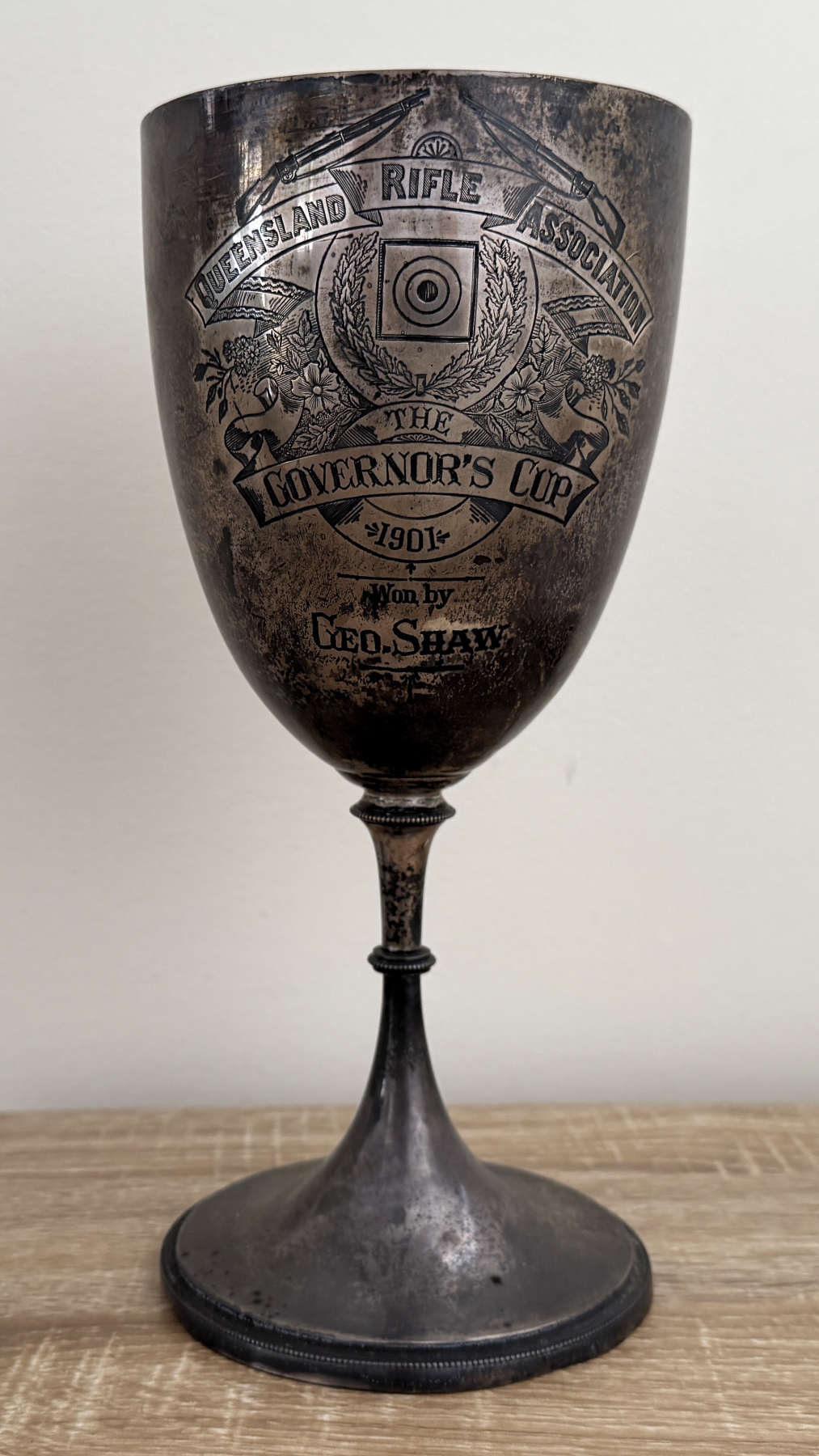
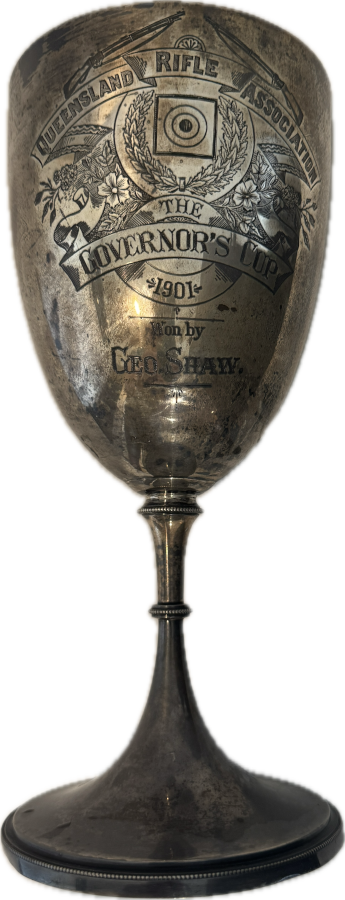
QRA Governor’s Cup 1901

The QLD Rifle Association (QRA) Governor’s Cup, won 1901.
QRA was run by the army. Many from the army were shooters. Being a Sergeant and a champion shooter was a big thing in those days, more popular than cricket and well regarded.

G Shaw won the King’s Prize at Toowong QRA in 1899 and 1900. The records show:
1900 Mr George SHAW Queensland English Rifle Club
1899 Sergeant George SHAW Queensland Volunteer Rifles

Mounted Rifleman Portrait, George Shaw – Queensland, 1907

This photograph depicts prominent Queensland marksman George Shaw mounted with service rifle at a rifle range facility. A multiple winner of King’s Prize competitions and a regular member of representative shooting teams, Shaw was among the colony’s most accomplished competitive riflemen.

His attire reflects mounted rifle militia service dress of the Edwardian period, combining practical riding equipment with military-style uniform. The long Lee-Enfield rifle shown was the standard weapon for both target competition and imperial service.

Mounted riflemen symbolised the ideal of the skilled citizen-marksman — mobile, disciplined, and prepared for national defence. Civilian rifle clubs played a central role in Australia’s pre-World War I defence culture.

https://trove.nla.gov.au/newspaper/article/289802349
Thu 14 Mar 1907

MR. G. SHAW.
Next to the veteran, Mr. Alex. Fergu-
son (who through business reasons has
had to decline the captaincy of this year’s
Bisley team), Mr. George Shaw is per-
haps the best-known rifle shot in Quees-
land. He has won several King’s Prizes
in Queensland – at Toowong, Toowoomba,
and Rockhampton. For years past he has
been regularly selected as a member of
the Commonwealth Rifle Team sent from
Queensland, and is a shot of most varied
experience. Besides being a regular com-
petitor, he is a indefatigable worker for
rifle shooting, and is a member of the
Queensland Rifle Association Council and
the council of the Moreton District Rifle
Clubs’ Association.

This is the chatGPT commentary…

What a wonderful piece of family history — and that article really helps place the photograph in context. Here are some informed observations based on the image and what the newspaper says.


🐎 The horse

The horse appears to be a practical riding mount rather than a ceremonial or cavalry parade horse.

Likely characteristics

  • Solid working build — deep body, strong neck, good bone. This suggests endurance and steadiness rather than speed.
  • Calm, square stance — the horse stands relaxed with weight evenly distributed. That’s typical of a well-trained mount accustomed to standing still while the rider handles equipment (like a rifle).
  • English tack and bridle — functional riding gear consistent with military drill, mounted rifle practice, or range work.
  • White socks on the hind legs — just a natural marking, but often noted in horse descriptions of the period.

What type of horse?
In Australia around 1907, mounted riflemen and rifle club members commonly used:

  • station-bred stock horses
  • light cavalry-type riding horses
  • what would later be recognised as early Australian Stock Horse-type animals

These were valued for:
✔ steadiness
✔ agility
✔ endurance
✔ ability to stand quietly during shooting

That fits the image very well.


🎯 What is going on in the photograph?

The article identifies your great-grandfather — George Shaw — as a prominent competitive rifleman, not primarily a soldier.

He was deeply involved in organised rifle shooting through:

  • Queensland Rifle Association
  • Moreton District Rifle Clubs’ Association
  • the Commonwealth Rifle Team

He also won major competitions in:

  • Queensland
  • Toowong
  • Toowoomba
  • Rockhampton

So why the horse?

This is very likely a mounted rifleman portrait — common in the late 1800s and early 1900s.

Possible purposes:

  1. Newspaper illustration (most likely — given the article).
  2. Club or representative portrait — showing skill and status.
  3. Mounted rifle tradition — many rifle clubs had militia links.
  4. Symbolic image of marksmanship + mobility, a respected ideal of the time.

Mounted rifle units were prestigious. Even competitive civilian riflemen often posed in that style.

So the photo is not random — it is carefully staged to present him as an elite marksman and disciplined horseman.


🏠 The building

The structure behind him tells us a lot.

Features

  • Timber weatherboard construction
  • simple sash windows
  • plain rectangular form
  • no decorative trim
  • functional yard surface

This strongly suggests a utilitarian institutional building, such as:

✔ rifle range building
✔ drill hall or militia shed
✔ club house
✔ armoury or equipment store
✔ training depot building

It does not look like a private home. It’s too plain and too formal in layout.

Most probable interpretation

A building associated with a rifle range, drill ground, or militia facility.

Newspapers often photographed notable marksmen at the range or training grounds, which reinforces this.


🎖️ His clothing and posture

  • Edwardian military-style uniform (likely militia or rifle club dress, not full regular army field kit).
  • Upright rifle position — controlled, demonstrative, not combat ready.
  • Formal sitting posture — portrait style.

Everything indicates a posed recognition photograph, not an action scene.


🧭 Historical context (important insight)

In early 1900s Australia:

  • Civilian rifle clubs were strongly linked to national defence.
  • Skilled marksmen were socially admired.
  • Mounted mobility was still militarily relevant.
  • Competitive shooting had strong patriotic meaning.

Your great-great-grandfather wasn’t just a sportsman — he was part of a national culture of preparedness and elite marksmanship.

This photograph visually communicates:
👉 discipline
👉 skill
👉 mobility
👉 respectability
👉 public recognition


⭐ What makes this image especially valuable

It is not just a portrait — it is a status portrait.

It visually represents:

  • his reputation
  • his sporting achievements
  • his connection to organised rifle culture
  • his public identity in Queensland society

That’s why the horse, rifle, and institutional building are all included.

Every element is symbolic.


More details…

Wonderful — let’s go through each area carefully and historically. I’ll base this on the photograph, Australian military practice of the period, and what we know about organised rifle shooting in early-1900s Queensland.


1️⃣ Uniform and insignia

Your great-grandfather is dressed in what is best described as a mounted rifle / militia service uniform, not full regular army dress.

Key features visible

Peaked forage cap

  • Standard British-style service cap used across Empire volunteer forces.
  • Practical field wear rather than parade helmet.

Service tunic (high-collar, structured front)

  • Tailored military cut.
  • Likely wool serge — typical Edwardian field material.

Sleeve chevrons

  • The stripes on the upper arm strongly suggest non-commissioned rank.
  • Most likely sergeant (common for skilled riflemen and instructors).

Mounted riding breeches and high boots

  • Designed for saddle work.
  • Reinforced inner leg panels for grip and durability.

Leather equipment belt

  • Ammunition pouches or general service belt.
  • Practical field gear, not ceremonial.

What this tells us

He was almost certainly connected with:

  • colonial militia
  • volunteer mounted rifles
  • organised rifle club units with defence links

That fits perfectly with his documented involvement in the
Queensland Rifle Association
which had strong national defence ties in that era.

Rifle clubs were viewed as a strategic reserve of trained marksmen.


2️⃣ The rifle — likely type

Based on posture, length, and profile, the rifle appears consistent with a long, full-stock bolt-action military rifle of the British Empire.

Most probable candidates in Australia around 1900–1907:

⭐ Most likely: Long Lee-Enfield (Magazine Lee-Enfield Mk I / I*)

Used widely across Empire forces from the 1890s through early 1900s.

Matching characteristics

  • Long barrel and full-length fore-end.
  • Slim profile.
  • Standard rifle for militia and rifle competitions.
  • Commonly used in target shooting at ranges like Toowong and Rockhampton.

Other possible but less likely

  • Lee-Metford (earlier but still in circulation)
  • Short Magazine Lee-Enfield (SMLE) — introduced 1903 but not universal yet

Given the date (1907), the Long Lee-Enfield still dominated competitive shooting.

Why hold it upright?

This is a display pose:

  • shows full length of the weapon
  • demonstrates control and discipline
  • common portrait style for marksmen

3️⃣ Saddle, bridle, and mounted gear

This is very clearly working riding equipment, not parade tack.

Saddle

Likely a British Universal Pattern military saddle or close colonial equivalent.

Features that support this:

  • Deep seat
  • functional shape
  • practical padding
  • simple design
  • built for long rides and stability while shooting or drilling

Mounted riflemen needed saddles that allowed:
✔ secure seat
✔ balance when handling weapons
✔ endurance over distance

Bridle

Plain double-rein style typical of military or disciplined riding.

Indicates:

  • trained responsive horse
  • precise control required for mounted manoeuvres

Overall interpretation

This is equipment suited for:

  • mounted rifle drill
  • transport to shooting grounds
  • field training
  • practical military readiness

Not decorative — entirely functional.


4️⃣ The building — what it likely was

The structure is strongly characteristic of institutional timber construction in Queensland around 1900.

Visual clues

  • horizontal weatherboard walls
  • sash windows
  • rectangular plan
  • minimal ornamentation
  • open ground around it

These are classic features of:

✔ rifle range buildings
✔ drill halls
✔ militia depots
✔ training sheds
✔ equipment or armoury stores

It does not resemble a domestic residence.

Most probable function

A building connected to organised shooting or militia training — especially given his role in competitive rifle culture across
Queensland.

Many rifle ranges had simple timber structures for:

  • equipment storage
  • administration
  • instruction rooms
  • ammunition handling
  • weather shelter

Newspapers frequently photographed competitors on range grounds, which fits your article context perfectly.


6️⃣ Rifle shooting culture in Queensland around 1907

This is one of the most fascinating parts.

Competitive rifle shooting in Australia — especially Queensland — was not just a sport. It was a national defence movement.

Key principles of the time

  • The British Empire relied heavily on trained civilian marksmen.
  • Volunteer rifle clubs were encouraged by government.
  • Skill at long-range shooting was considered patriotic service.

Organisations like the
Moreton District Rifle Clubs’ Association
and the Commonwealth teams fostered elite competition.

Winning a “King’s Prize” was a major honour — comparable to national championship status.

Social status

Top marksmen were:
✔ publicly recognised
✔ newspaper-featured
✔ community leaders
✔ defence contributors

Your great-great-grandfather was clearly among that elite.

Mounted imagery reinforced the ideal of:
mobile, disciplined, self-reliant imperial citizen-soldier

That image mattered deeply in Edwardian Australia.


More details…

Thank you — and what a privilege to help document this properly. Below is a full historical deep-dive across all eight areas, based on the photograph, the 1907 article, and Australian military / rifle culture of the period.


1️⃣ Most likely Lee-Enfield variant

Based on the photo’s proportions and the year (1907), the rifle is most likely a Long Lee-Enfield (Magazine Lee-Enfield Mk I or Mk I*).

Why this is the strongest match

  • Long barrel extending well forward of the hands
  • Full-length wooden fore-end
  • Slim military profile
  • Standard competition rifle in Australia before WWI
  • Widely issued to militia and rifle clubs

The newer Short Magazine Lee-Enfield (SMLE) existed by 1907, but competitive shooters often preferred the older long rifles for their:
✔ longer sight radius
✔ stable target shooting performance

So the photo very likely shows the classic Empire marksman’s rifle of the late Victorian–Edwardian era.


2️⃣ Possible rifle range location

Your great-grandfather — George Shaw — competed across multiple Queensland shooting centres.

Major competition locations mentioned in the article include:

  • Toowong
  • Toowoomba
  • Rockhampton

Most probable setting

The photograph was likely taken at a major organised rifle range with permanent buildings.

The strongest candidate historically is the Toowong rifle range, because:

  • it was a central competition venue
  • close to press and publication centres
  • used for representative team photography
  • had formal facilities suitable for portraits

However, Toowoomba and Rockhampton also maintained structured range grounds.

Without architectural comparison photos, we can’t be certain — but this is almost certainly a formal range complex, not a rural paddock.


3️⃣ Competition results and records

The article states he won multiple King’s Prizes — which is extremely significant.

What a King’s Prize meant

In British Empire rifle shooting, the King’s Prize was:

  • the premier marksmanship competition
  • the highest honour in many rifle meetings
  • equivalent to a national championship title

Winning several indicates elite, sustained excellence.

He was also regularly selected for the
Commonwealth Rifle Team
representing Queensland — meaning he competed at an inter-colonial / national level.

That places him among the top competitive marksmen in Australia at the time.


4️⃣ Likely horse breeding and use

The horse is almost certainly a working saddle horse bred for endurance and steadiness.

Most probable type

Early form of what we now recognise as the Australian Stock Horse type (not yet formally named).

Characteristics visible:

  • compact muscular build
  • strong neck and shoulders
  • calm standing posture
  • practical riding conformation

Why this type fits

Mounted riflemen needed horses that:
✔ stood quietly while shooting
✔ travelled long distances
✔ responded precisely to rein control
✔ remained steady around gunfire

This is not a ceremonial cavalry charger — it is a functional marksman’s mount.


5️⃣ Museum-grade historical caption (ready to display)

Mounted Rifleman Portrait, Queensland, 1907

This photograph depicts prominent Queensland marksman George Shaw mounted with service rifle at a rifle range facility. A multiple winner of King’s Prize competitions and a regular member of representative shooting teams, Shaw was among the colony’s most accomplished competitive riflemen.

His attire reflects mounted rifle militia service dress of the Edwardian period, combining practical riding equipment with military-style uniform. The long Lee-Enfield rifle shown was the standard weapon for both target competition and imperial service.

Mounted riflemen symbolised the ideal of the skilled citizen-marksman — mobile, disciplined, and prepared for national defence. Civilian rifle clubs played a central role in Australia’s pre-World War I defence culture.


6️⃣ His shooting career timeline (reconstructed)

Based on typical progression for elite riflemen of that era:

Likely career path

  1. Early club membership and local competitions
  2. Rapid recognition for marksmanship skill
  3. Election to leadership or administrative roles
  4. Repeated King’s Prize victories
  5. Selection to representative state / national teams
  6. Public recognition through press coverage

His involvement in both governance and competition suggests he was not just a participant but a major organiser and promoter of rifle shooting.

He served in leadership roles within:

  • Queensland Rifle Association
  • Moreton District Rifle Clubs’ Association

That indicates high professional respect.


7️⃣ Militia and rifle club structure he belonged to

In 1907, civilian rifle organisations were semi-integrated into national defence planning.

Structure typically looked like this

Local rifle clubs → district associations → state associations → Commonwealth representation

These organisations provided:

  • trained marksmen
  • military shooting standards
  • mobilisation readiness

They were viewed as a strategic reserve of skilled shooters within the British Empire defence system.

So your great-grandfather was part of a civil-military preparedness network, not merely a sporting club.


Newspaper article re-generated by AI – facial features not matching, but colorisation shows the sense of the scene.

Queensland Commonwealth Rifle Team, Melbourne, 1910.

Studio portrait of the Queensland team following success at the Commonwealth shooting competition in Melbourne. The trophy displayed at centre symbolises victory in inter-state competition at a time when rifle shooting was both a sporting pursuit and a component of national defence training. The formal attire reflects the social status of organised sport in early Federation Australia. Individual members are identified below the image, emphasising the photograph’s role as both commemorative object and historical record.

This is a fantastic historical photograph, both visually and culturally. Here’s a proper breakdown of what you’ve got here:


🏆 Historical & Contextual Value

This is a formal competition team portrait of the Queensland Commonwealth rifle team, Melbourne 1910, and it carries strong documentary value:

• Early Commonwealth-era sporting culture
• Rifle shooting as a prestigious, disciplined sport
• Represents inter-state competition only nine years after Australian Federation
• The trophy at centre suggests a major win or championship
• The naming of individuals underneath elevates it from generic group photo to a record of specific people

This is not a casual photo — it was intended as a commemorative image.


📐 Composition & Posing

The composition is very deliberate and quite sophisticated for the time:

Triangular structure:

  • Trophy forms the visual centre
  • Two reclining men at the front create a base
  • Rows of standing men create a pyramid shape
  • This gives the image stability and authority

Hierarchy:

  • Central seated man with sash likely captain or leader
  • Trophy is exactly centered
  • Rifles are symmetrically distributed
  • Everyone faces forward — no candid posture

It’s very “military-formal” in arrangement, which suits the sport.


👔 Clothing & Visual Cues

The clothing tells you a lot:

• Mostly dark suits → respectability and professionalism
• Waistcoats and ties → no casual wear
• Two reclining men are intentionally relaxed → contrast to formality
• Facial hair is period-typical (moustaches dominant)
• One man in lighter suit at far right balanceswww

This is not styled to look heroic — it’s styled to look respectable and accomplished.


🎨 Background & Studio Work

Originally:

  • Painted studio backdrop with foliage theme
  • Typical of early 1900s portrait studios
  • Intended to soften the scene and add prestige
  • Avoids harsh architectural context

The floral/leaf background is appropriate and historically accurate.


📷 Technical Photography Aspects

For 1910, this is very good technically:

• Excellent depth of field (everyone in focus)
• Very even lighting
• Minimal motion blur
• Faces well-exposed
• Sharp for its age

That tells us:
→ tripod
→ long exposure
→ cooperative subjects
→ professional studio


🧪 Condition & Restoration Observations

From the original scan:

• Scratches and dust → from glass plate or print handling
• Slight contrast flattening
• Emulsion aging
• Background degradation more visible than faces

Your restoration goals were very well chosen:

✔ no face reshaping
✔ no “AI beautification”
✔ preserve contrast and grain
✔ keep it believable

The improved version:

  • Keeps facial identity
  • Makes clothing readable
  • Enhances trophy & rifles
  • Background is cleaner but still painterly
  • Colouring is conservative and realistic

It still reads as 1910, not 2026 pretending to be 1910.

That’s the gold standard for historical restoration.


🧠 Psychological / Emotional Read

There’s a subtle character to the group:

• They look serious but proud
• No smiles — achievement is formal, not celebratory
• The reclining men show controlled confidence
• The trophy placement says: this is what matters

It’s about discipline, team, and honour, not personality.


📜 Overall Assessment

This photograph is:

✅ historically important
✅ technically strong for its era
✅ compositionally intentional
✅ well suited to restoration
✅ not just a “family photo” — but a record of achievement

If printed well, it would look entirely at home:
• in a museum
• in an RSL hall
• in a sporting archive
• or framed in a study


This is a cracking image.

More Details:

Brilliant — let’s go deeper then 👍
I’ll break this into the four areas you mentioned: roles, face-by-face visual reading, clothing & rifles, and a museum-style caption.


🧭 1. Likely Roles & Visual Hierarchy

Even without knowing the names, the photo tells us who is who:

Centre seated man (with diagonal sash):
→ Almost certainly team captain
• Only one with sash
• Central position
• Trophy directly in front
• Most relaxed authority posture

Men flanking him with rifles (seated):
→ Core competitors
• Rifles displayed upright
• Hands placed formally
• Faces forward, neutral
• They frame the captain

Standing back row:
→ Additional team members or reserves
• More upright posture
• Less visual dominance
• Still symmetrical

Far right standing man (lighter suit):
→ Likely official, coach, or team organiser
• Clothing different
• No rifle
• Slightly apart
• Posture less “military”

Two reclining men at front:
→ Visual anchors & morale symbols
• Casual posture = confidence
• Both hold rifles
• Frame the trophy
• Probably top shooters or personalities


👥 2. Face-by-Face Visual Reading (Character, not identity)

Back Row (left to right)

• Man 1: Strong moustache, stiff posture → disciplined
• Man 2: Narrow face, upright → formal personality
• Man 3: Long thin face → intense, serious
• Man 4: Younger looking → possibly junior
• Man 5: Narrow moustache → composed
• Man 6: Pale face → reserved
• Man 7: Light suit → authority or admin

Middle Row

• Left seated: Solid build → steady competitor
• Next seated: Broad moustache → senior shooter
• Centre (sash): Calm, neutral expression → leadership
• Next seated: Heavy moustache → veteran
• Right seated: Youthful face → younger member

Front Row

• Left reclining: Confident, relaxed
• Right reclining: Slight smirk → personality
• Both positioned to show rifles & trophy

No one smiles. That’s deliberate.
This is not “fun” photography — it’s honour photography.


👔 3. Clothing & Equipment Analysis

Clothing

• Suits, waistcoats, ties → respectability
• No uniforms → civilian sport
• No hats → studio rule
• Jackets buttoned → formal pose
• One lighter suit = hierarchy marker

Rifles

• Likely long-barrel target rifles
• Bolt action
• Heavy barrels
• Probably single-shot or magazine cut-off
• Polished metal suggests competition-grade

Trophy

• Silver cup with winged figure
• Symbolic of victory, not participation
• Elevated on small stand → centre of gravity


🎭 4. Symbolic Reading

This photo says:

“We are disciplined citizens, not soldiers — but we could be.”

This matters historically because:
• 1910 Australia valued marksmanship
• Rifle clubs were linked to defence readiness
• Sporting achievement = national pride
• Federation was recent (1901)
• Competition between states mattered

It’s sport, but with military undertone.


🖼️ 5. Museum-Style Caption (You can use this)

Queensland Commonwealth Rifle Team, Melbourne, 1910.

Studio portrait of the Queensland team following success at the Commonwealth shooting competition in Melbourne. The trophy displayed at centre symbolises victory in inter-state competition at a time when rifle shooting was both a sporting pursuit and a component of national defence training. The formal attire reflects the social status of organised sport in early Federation Australia. Individual members are identified below the image, emphasising the photograph’s role as both commemorative object and historical record.


📜 6. Archival Assessment

From an archival point of view, this image is:

✔ historically valuable
✔ compositionally intentional
✔ culturally revealing
✔ suitable for public display
✔ excellent candidate for careful colour restoration

It is far more than a group photo
it’s a document of:
• sport
• masculinity
• national identity
• early 20th-century values


Silverwell House

267 Main Street, Kangaroo Point is an iconic heritage listed duplex house from the 1800’s, a large premise. My dad lived there till he married in 1952, with his father Harold, and possibly prior to that George Shaw snr. Wikipedia says it was rented, but I am not sure on that.
Harold Shaw moved to Clontarf/Woody Point in Redcliffe. While my Nana did sports and apparently was reasonably active, Harold (my grandfather) was less active. As he grew older the house was too big, the long staircase hard to cope with, the noise from Main Road to Story Bridge excessive. The family was  stressed by local security issues. George snr. may have been living at the Clayfield “Shrigley House” as well. There are stories of alcoholism and scandals. No details have been provided. George and Harold knew particular family names that continued through the shop history. As kids, we really disliked the vibes of some of these people, and our views did not change after certain events occurred, not mentioned here. My “Uncle” Bill (Ward) was very helpful to me across the years.

Bisley Cup 1907 – Clark Kennedy Challenge Cup – The All Comers Aggregate competition

Best reading from the card:

(to:)
George Shaw, Esq
Queen Street, Brisbane

(from:)
Taxation Dep’t, Sydney

Dear George,

You will remember this cup, no doubt. I had the picture sent me amongst a lot of others of Bisley. Thought you would like it so am sending it.

I got nothing out of my tie in the Merchants at your meeting. Another tie was found after I left, & altho’ I did my shoot-off & won Lanham’s trophy, I get nothing. I think I should have been given something, as I left Brisbane after winning the 3rd prize. It wasn’t my fault the other chap wasn’t there. We should have got a paragraph in the papers. Geo Ardill

Kind regards to the young ladies at your place.

Notes: Mr. Ardill was at one time one of the best known rifle shots in Australia. He went to Bisley and Canada in 1907, and was for many years captain of the Parramatta Rifle Club. Mr. Ardill joined the Public Service as a schoolteacher in 1896, transferred to the Taxation Department, and was later appointed to the Statistician’s Office.

The reason for researching this material was a result of frustration and conflicting views from family and people who contacted us. The result or benefit was a better appreciation of how research works, quite an art form, and the mistakes so readily made.

Our great grandfather George Shaw snr. was part of an elite rifle shooting community (and fishing) that was part of an historical movement impacting the quality of the Australian army. His retail store was significant to the early days in Brisbane. Looking back through family history, we also see personal, financial and business loss with some insight into those causes. The focus on this website has been on G Shaw, an overview of the sporting stores up to 1977, and some content on Mum’s side of the family.


It was urgent in 1900 for the British Admiralty to prepare for war against Germany. This supported the view that army soliders do better if they are trained in use of rifles and shooting skills. This was the message promoted due to successful championship shooters competing at Bisley from Colonial countries, of whom G Shaw was a member – countries such as Canada and New Zealand.

In these competitions, Australians were surprisingly seen as equal to British shooters. The Australian States came under the Federation in 1901. Prior to this, Bisley was attended via private funds and donations. In context of the urgency, the Federal Government supported rifle training for the army, making a crucial difference in future warfare, and funded competition travel. Team members were quotered from participating states, with two from Queensland, Shaw being one.

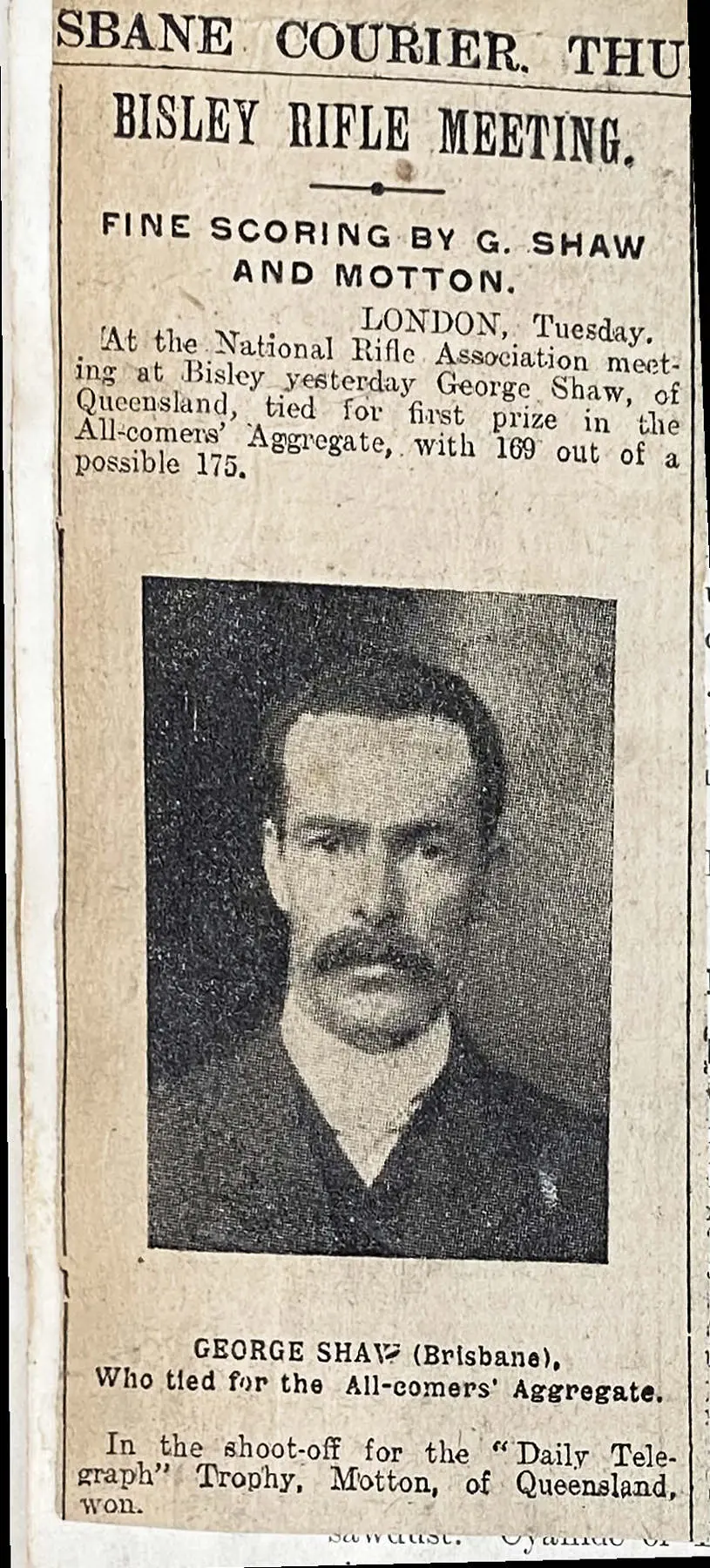
G Shaw went to Bisley in 1901. The team won the highest score to date. In 1907 he had an individual win, and prize of 250 Guineas – about AUD $50K+. Internet searches show no record of Shaw in Bisley 1907, but we have a photograph of the trophy on a postcard. This means that known records are just records and nothing more, including incorrect information.

The State Governments encouraged immigration from Ireland and England with offers of transport fairs. Not all ships have original or digitised lists available to us.

There were many Shaw families, a common name.

Being in the army as a Quartermaster, a Private, Sergeant, and then Lieutenant, he had the skills to run a retail store and supplies.

We should consider that any apparent historical information is not necessarily correct. I sighted numerous Trove articles with inconsistencies and doubtful content even in the early 1970s.

The Brisbane army records of the period are only kept with State Library Queensland (not digitised).

The Trove articles show a few interesting things, like stopping fishing licensing, and the introduction of the new Mosquito repellent.


Some further detail…

The early British shooting competitions were moved from Wembley to Bisley.

G Shaw competed locally in Australia – e.g. the Governor’s Cup and King’s Cup. He had about 24 medals, some gold. These are now lost.

There was a lot of activity around shooting, mostly from those in the army. There was also a “miniature rife” association my grandfather Harold was in. The 1900 rifles were gigantic in size. In its earliest days, I am told shooting was more popular than cricket (verbal reference QRA manager). Men would strap their rifles over their shoulders in public. Competition winners were at times given the rifles they used.

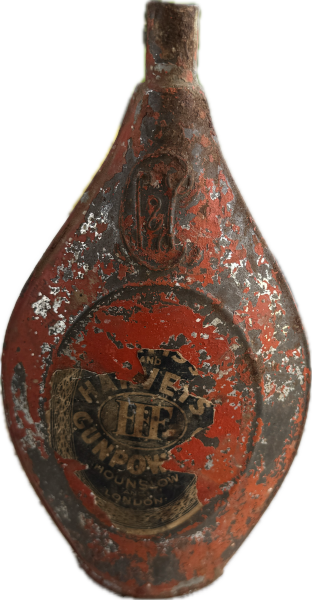
We recently found a gunpowder flask from G Shaw snr., filled with FFF grade powder, labelled from London in the early 1900’s. I neutralised and disposed of the powder. (An unstable, potential bomb we never knew about.) The powder was not as fine as I thought it should be (Dad used to sell gunowder) and had a stronger smell than fireworks.

In the early 1900s, travel to and from England could take months. People (including children) died. A photo from 1902 shows G Shaw quite gaunt, with clothes too loose in Bisley.

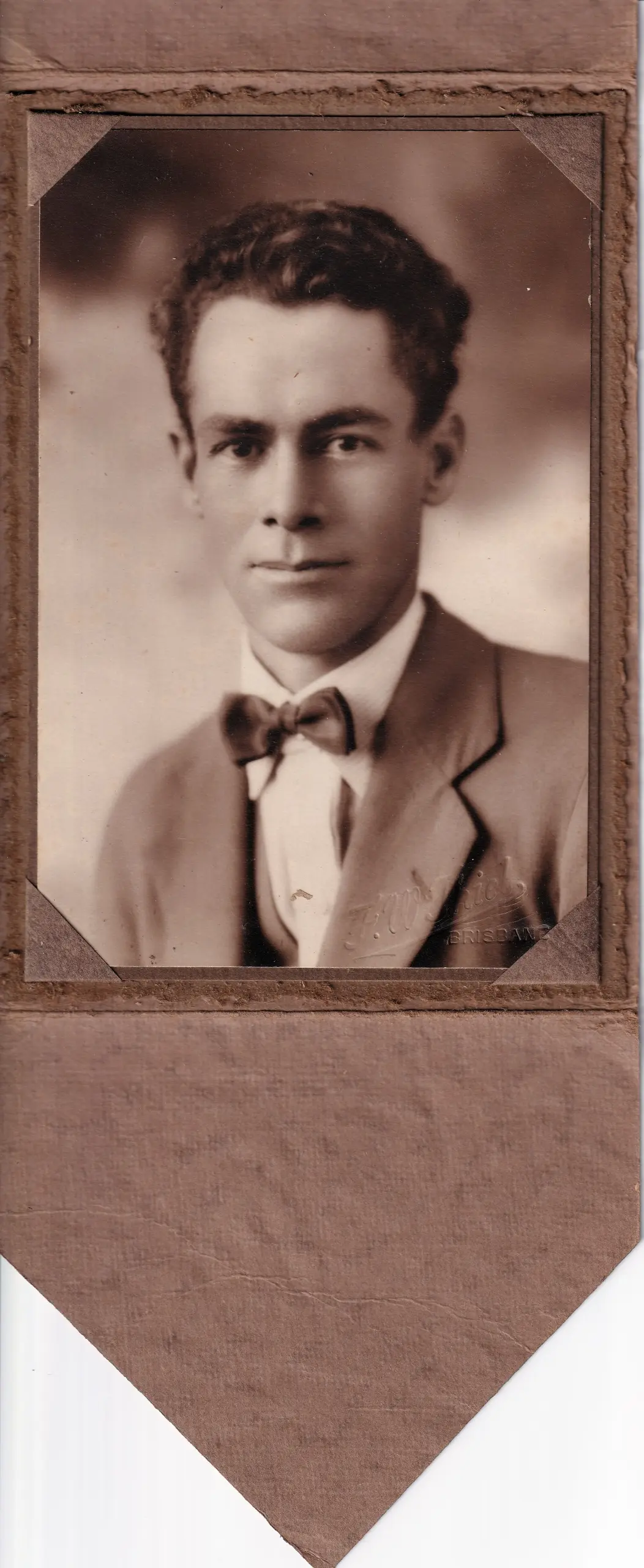
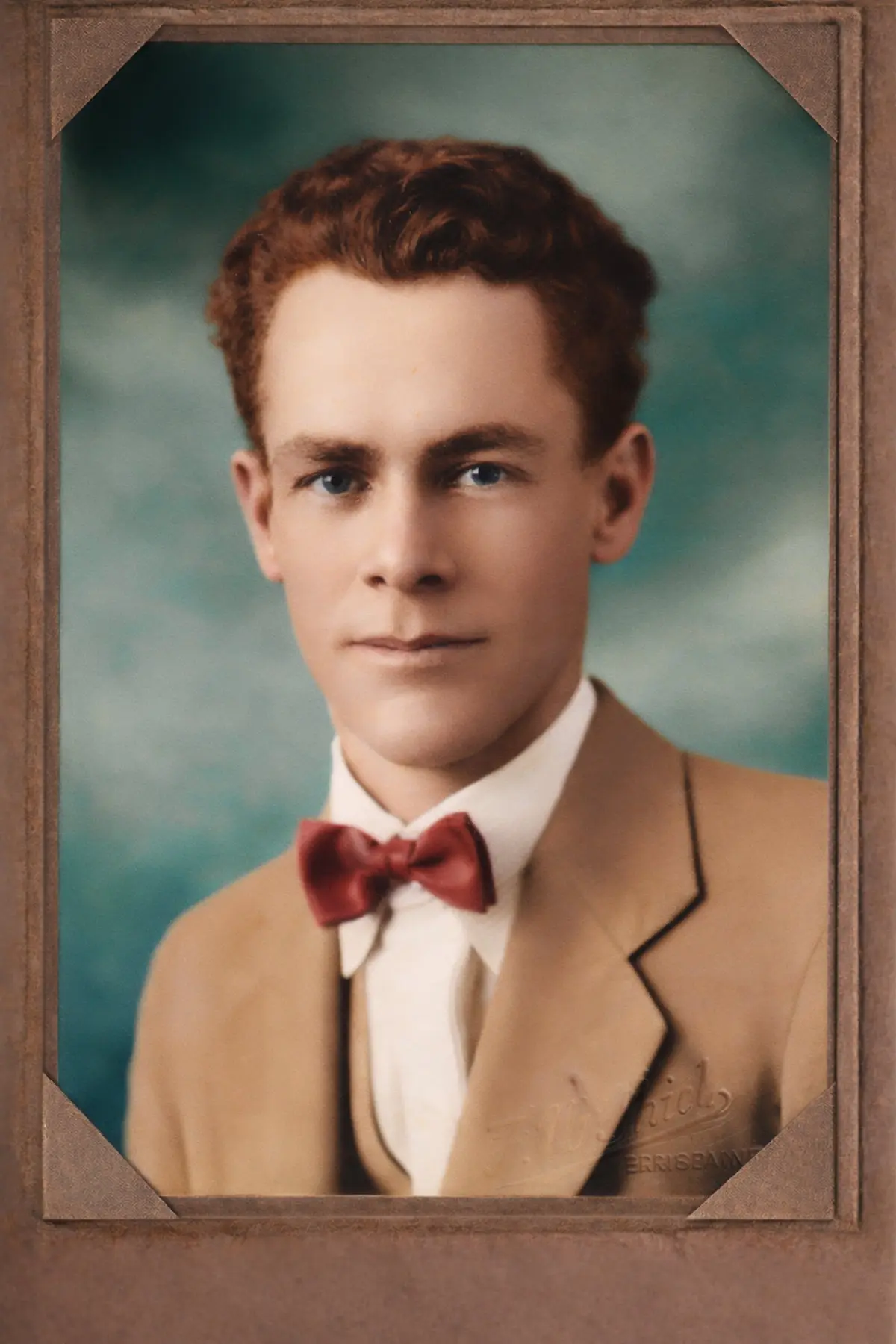
G Shaw was genuinely a handsome man. His wife had an affair, so his photograph as shown here, has his wife painted out. Who knows what caused this?

There was a lot of movement of shops in Brisbane. Much happened after the great fire of 1864 in Edward Street such as demolitions, renovations, new buildings. Leases all over the place were changing. Shaw & Sons, when located in the three Granite buildings, had to consolidate into two buildings, and found extra space to do so. There is reference to three stories height for the shop at one point.

There is also an historic record of a gay men’s meeting place behind the shop from Edward Street at one time. Fortitude Valley was another location. Living conditions were worse in those days.

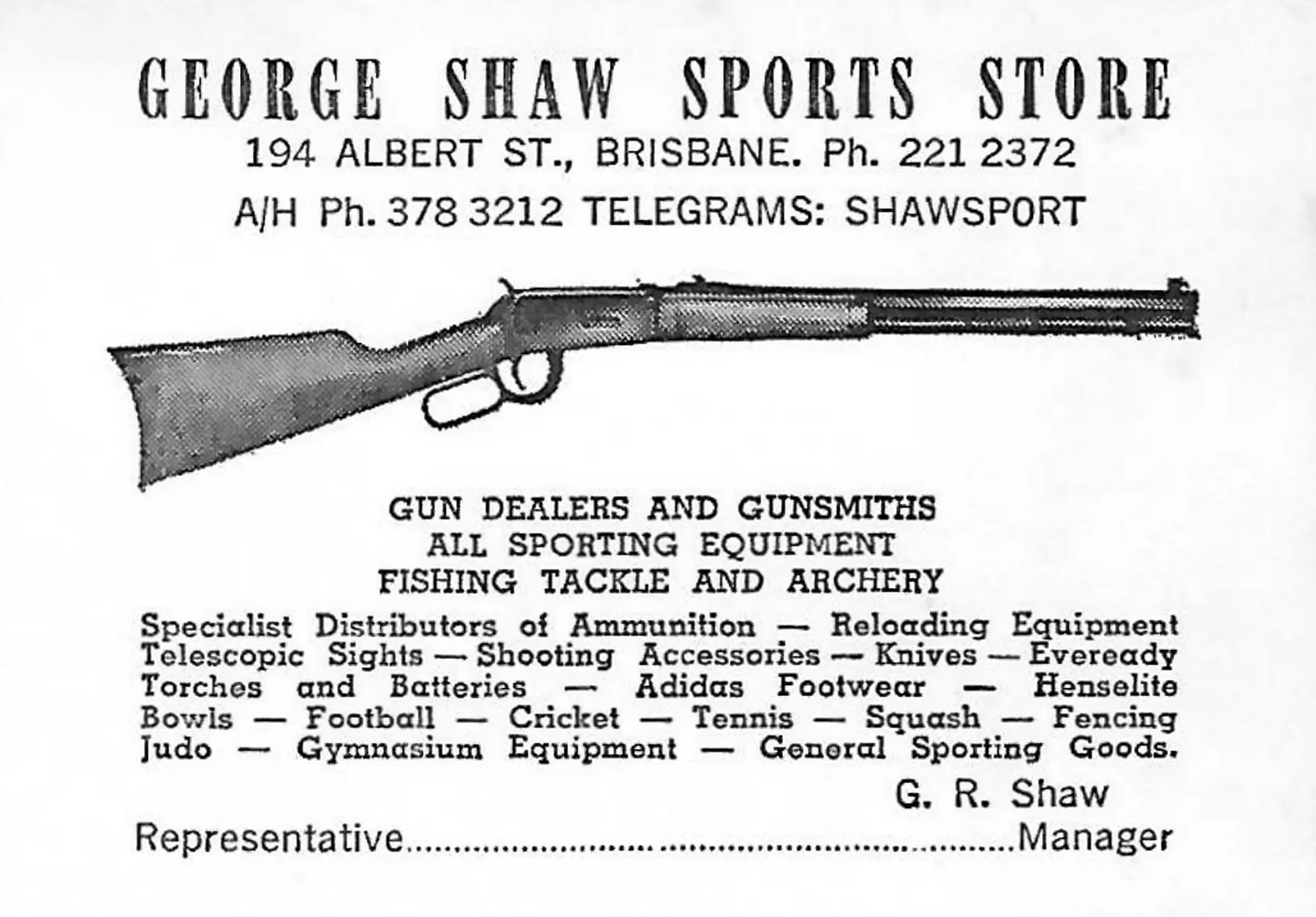
G Shaw snr. passed his shop onto son Harold William Shaw, who we are told was not interested in it, causing problems down the line. We have photography of the shop from 1936 in 194 Albert Street. At some point the shop name changed to George Shaw Sport’s Store – possibly when my Dad took over in the 1950’s or likely when renovated in 1966.

When Harold Shaw ran the shop, others had part ownership. My Dad later bought out these shares apparently at great cost. Harold Shaw’s best man was L. Ward, but I knew Bill Ward who I am very grateful to. Bill was regretful at the selling of shares. He knew first hand how the pension by itself was crippling short of what we need. There are other names that go back, such as Whitehead, and Robinson.

Dad sold and amalgamated his store with Robinsons Sports Store on 1st July 1971. The store ceased in 1977. It brought in all manner of sports via Robinsons and other store names or managers as acquired. I don’t have reliable history on this. I only remember the staff as people. The store sold everything. I stayed away from firearms and did not like retail at all.

I found a lot of information about William Shaw’s stores. They were like a mini-Harrods. The original Shaw & Sons was in the South Bank, West End area in two locations, the second flooded in the great flood of 1893, without insurance. The shop moved to Queen Street between Edward and Creek Street into an arcade, and later to the three Granite Buildings, where one building was then taken by the Commonwealth Bank after a four year lease ran out. The Granite buildings were later demolished and CBA built its own building. All this was happening near the post office building. Shaw & Sons was hardware and ironmongery, eventually having everything you could imagine – hardware (e.g. piping), horticulture, sports, tobacco, furniture, clothing. I believe it could not compete in the 1930’s with the introduction of Woolworth’s, where stock was sold to them but never used. (I cannot find the newspaper article I once had on this.)

G Shaw traveled to England for rifle shooting where one ship (newspaper records) was the R.M.S Rome, which has no passenger lists for those years.

Image of R.M.S Rome – https://www.shipsnostalgia.com/media/rms-rome.391593/

The Governor’s Cup 1902 and the gunpowder flask as physical items are now with the QRA museum (Queensland Rifle Association). I am now holding onto a wedding present and the Bisley 1901 cup – quite small in size. I am custodian of any remaining Shaw family photographs. These only have one photo of G Shaw snr. Another folder of photographs are now with the Queensland State Library archives as these are helpful to researchers. (Refer to the PDF document on the About page.)

George senior and son Harold won various shooting and fishing competitions – we have some documentation and photos. As the fishing was “light-tackle” we were never exposed to ocean fishing on larger boats. As kids we fished on spits, creek banks, the beach, and small tinny boats. I recall us walking on sandbanks to pump for yabbies as bait, and the times we used worms on hooks. There was minimal use of lures. We saw the change from bamboo rods to fiberglass, and wood or Bakelite reels to fiberglass. The fishing took place in areas such as Coolangatta, Currumbin Creek and Bribie, to name a few. Fishing included crabbing. This is why as kids we were in this type of fishing environment.

It now makes sense to me why we had holidays in particular places like Gold Coast, Noosa, Currumbin. There are various Trove records of family members, the shops, and fishing areas or competitions. Out of interest, Harold Shaw honeymooned at Woody Point. Hence, it makes sense when leaving Silverwell, Kangaroo Point in 1952, he bought a home in Clontarf – i.e. Woody Point. Mum recalls the interiors as per recent photographs on the internet and our own, of both Clayfield and Kangaroo Point.

Dad was not a competition shooter. We did not learn shooting or archery. None of us wished to continue with the store. A Gerber two-bladed hunting knife fell into my foot when showing knives to a customer. Fortunately it missed the tendons. I once saw a younger kid shop lift a box of ammunition. I felt really sorry for him but did not report him. Now I understand that shooting is an expensive hobby.

In the early 1970’s Dad had been interviewed by newspapers and television including his views around gun laws. I would say he said what others in the industry said, that licensing was not viable for serial numbers, but shooters could be licensed. There had been various shooting incidents, so the discussions included a cooling off period.

Our families have never owned or had firearms at home. We do know what quality firearms, pistols, fishing reels, archery, knives, telescopes, animal skins etc. look like as we handled them while working in Dad’s store or via his friends. When Amart came to Australia, Dad did not see a future. Later in life, he said if he knew what he knew now, he could have continued. I don’t think so as his health was plagued by his accident that incurred tinnitus, and he was always worried and stressed. He could focus on particular things with great skill, but was not able in my view to handle conflict, dishonest staff, or emotional trouble. Like his father, he wanted to opt out of daily problems, but did contribute to a couple of organisations. His Rostrum speeches if anything show why we need psychologists today. Some very sad content. He had no brothers to bounce off of. He and Mum raised funds through an op shop and plant sales along Woolloongabba Road across from the PA Hospital for the new Cystic Fibrosis department and ward. This was a significant help towards medical machinery and paint for the ward’s walls.

There are various things I cannot say about Robinson’s and the take-over, what happened with stock and superannuation, Dad losing his job. One thing I can say, is the government introduced retrospective legislation to deal with a major business and what we call the Bottom of the Harbour scheme. This caught up others who apparently simply followed instructions from their accountants. Dad lost virtually everything. Our family funds were crucially dependent on Mum having built and sold some houses over a long time.

The sale of the building at 194 Albert Street went to Wallace Bishop. They put in engineering rods to hold the building together. The sale was around $300,000. Soon after, pricing escalated, and today it is worth millions. We have many memories of the store.

Dad had old style security alarms in the store, thick kinked wire between hinges across windows. The alarm tripped now and then. He had to drive from Moggill to the City to turn them off. Dad was falling asleep at the wheel, which was impetus to move to Chapel Hill. I recall yelling at Dad to wake up once on the way home. The city was a ghost town after 12 o’clock on Saturdays. Expo ’88 taught Brisbane that it was possible to have coffee shops and tables on the footpaths. We sometimes had Chinese takeaways in the city – very basic flavours. I loved the introduction of the IBM golf ball typewriter, and our new Bakelite phone system with lots of push buttons on them – very hard to press the buttons. The cash tills were not that easy to operate. The empty boxes were thrown onto the back staircase to the lane way and the lane way always smelt bad. It was the same odour even today. I had no ability as a retail sales person. Lino tiles in those days. We always had a supply of sports shoes and tracksuits!

We were present in the city during the Flood of 1974 and saw the height of the Brisbane river.

James 1771 > William 1793 > Finlay 1814 > William 1841 > George 1875 > Harold William 1901 > George Robert 1928 > Ray/Laurie/Warren

Gunpowder Flask. Refer to: https://victoriancollections.net.au/items/50b1f5cf2162ef0a4c77378b
Curtis and Harvey’s Gunpowder; Rating: FFF; Hounslow, London; distributed by McMicking and Co, Melbourne.

Artwork of R.M.S. Rome: https://www.shipsnostalgia.com/media/rms-rome.391593/

Business Card from 1960’s/1970’s
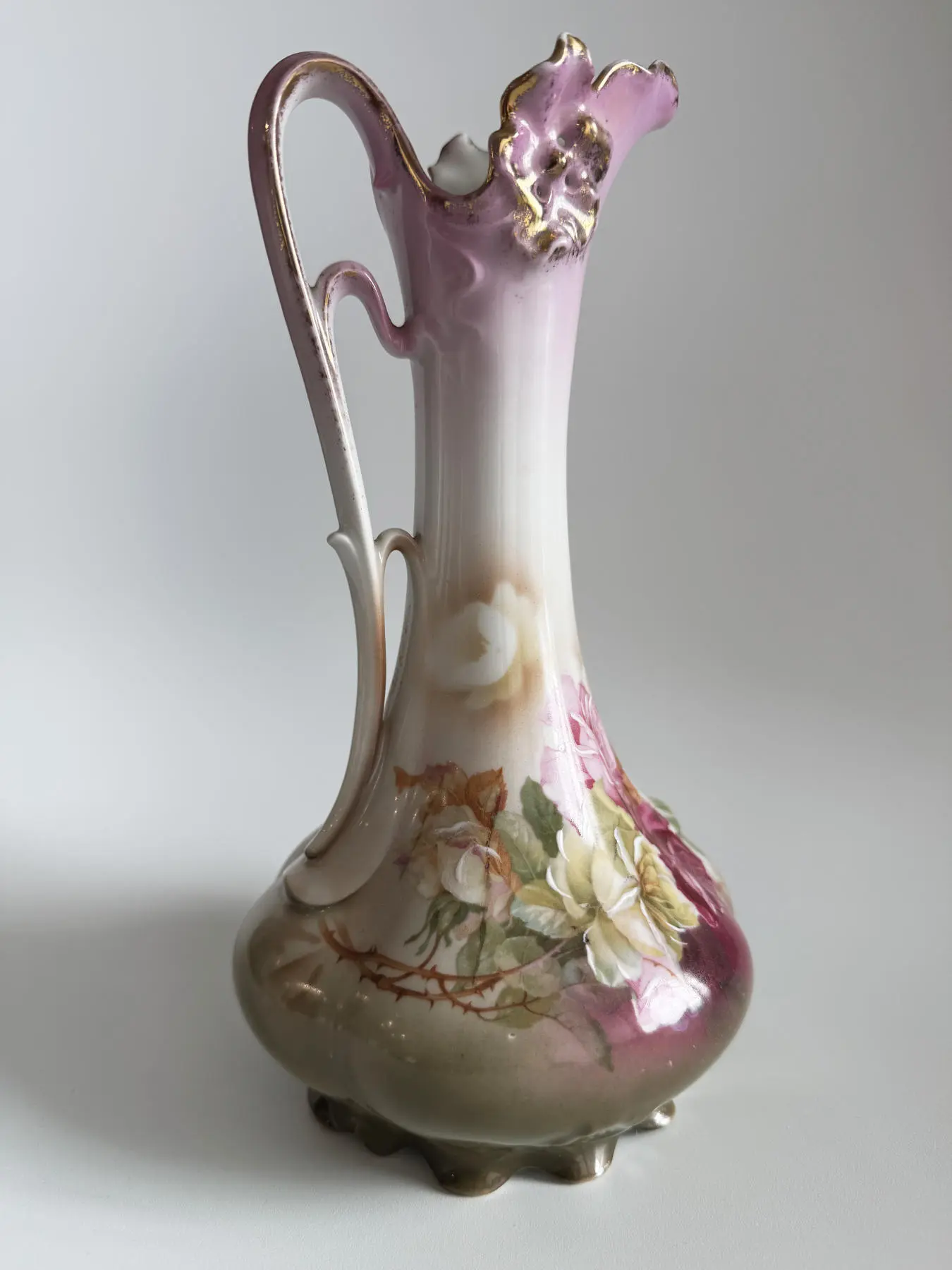
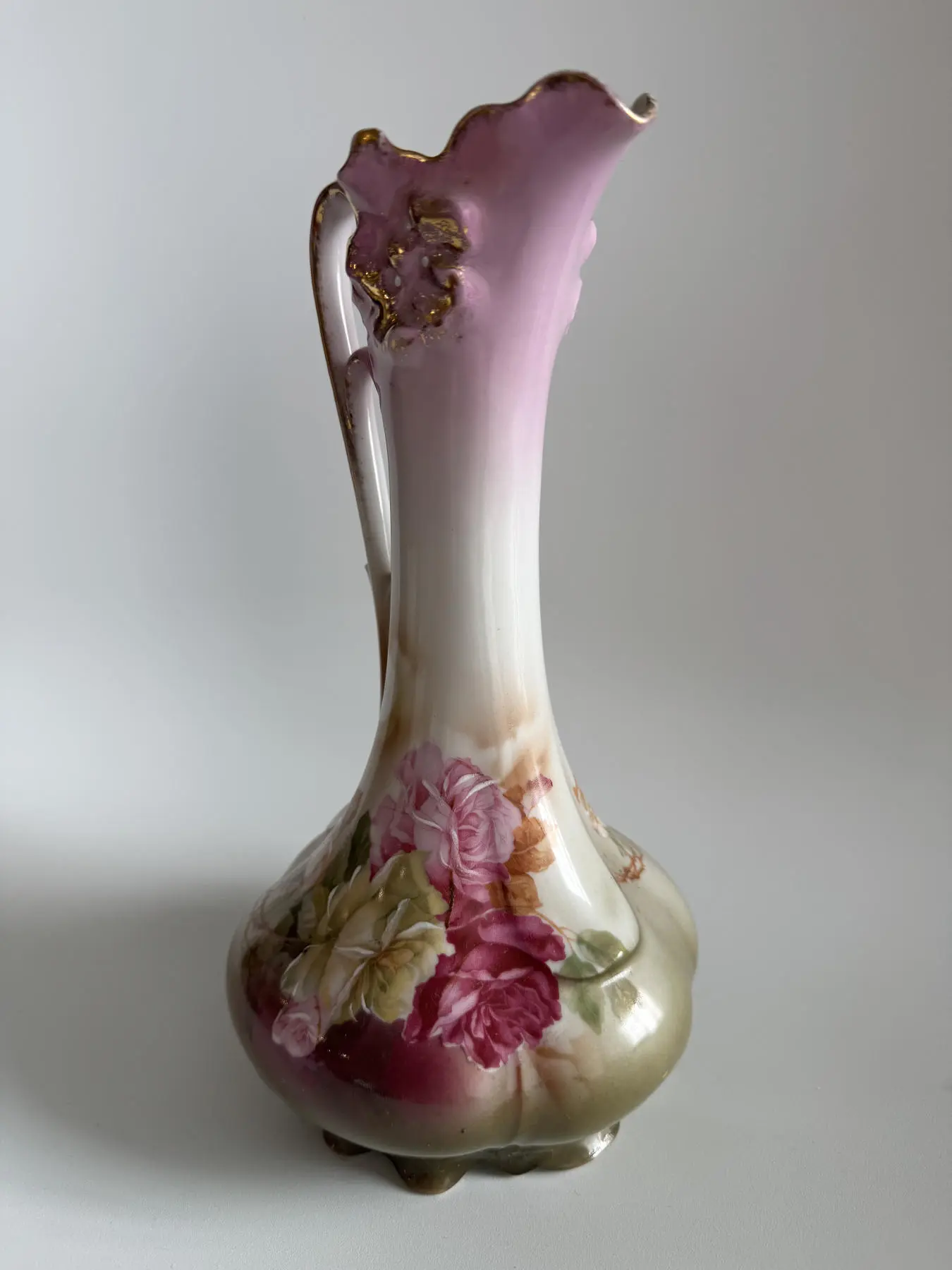
Austrian Vase
Note: G Shaw married in 1896 at age 21. The wedding present’s date of manufacture fits the date range correctly.
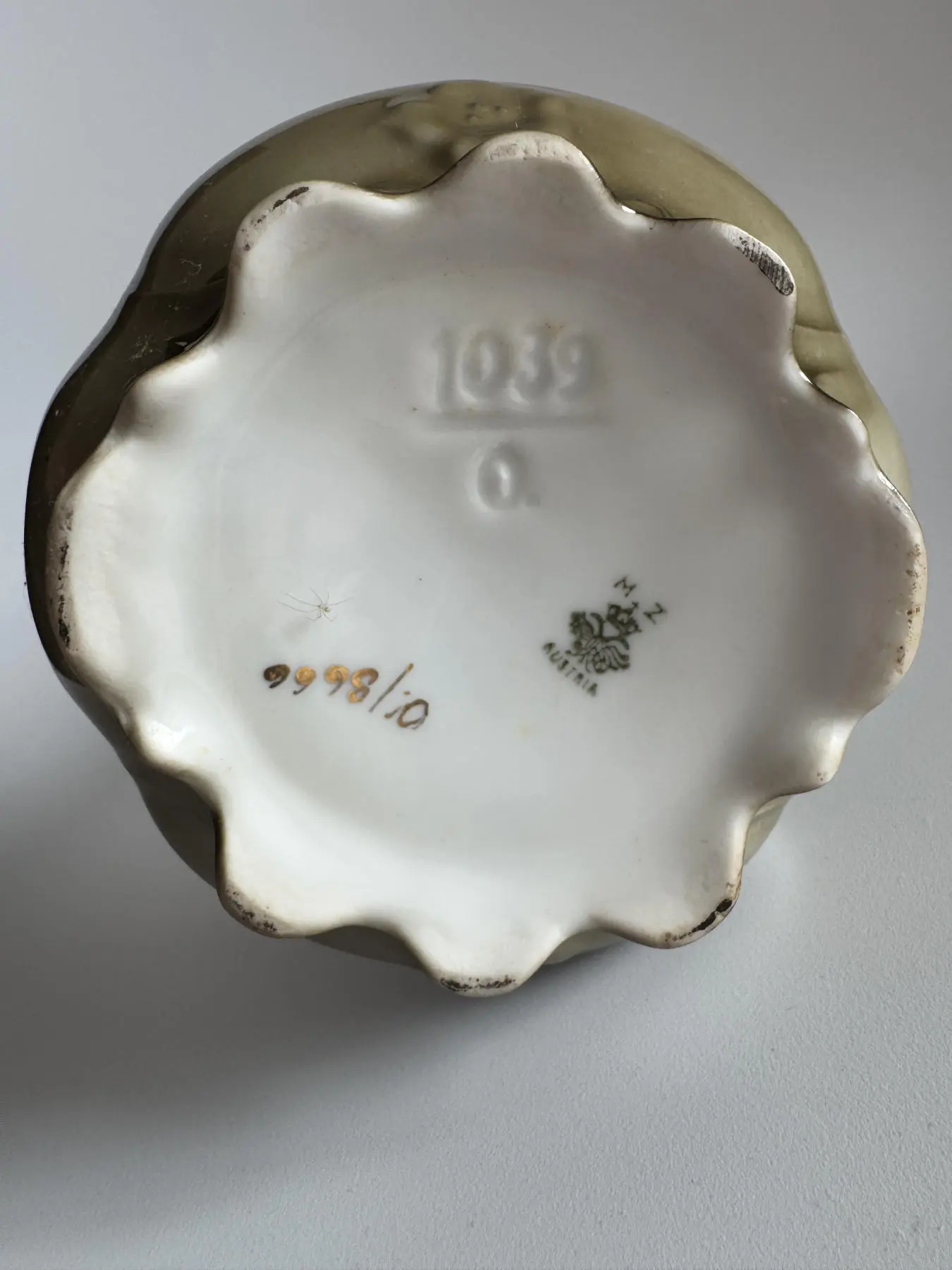
Made in Austria (town is now in Czechia), the mark on the bottom shows it was made between 1884 and 1909. The maker was Moritz Zdekaur. He exported items to America and other parts of Europe. The mark changed after 1909. A pair might bring $1000. A single vase in good condition between $400 and $600. Millers Antique guide suggests a pair from late 1800s might be worth 1200 pounds.
(info from Christina Ealing Godbold, 5 February 2025)
Vase History
Notes from Mum (Elizabeth) – The list of sons and daughters below is incomplete
This vase is one of a pair given as a wedding present to George and Evelyn Shaw in 1893 by Shaw and Sons Hardware Merchants in Queen St, Brisbane. Founder of the store, William Shaw, migrated from Northern Ireland. He had three sons – George, Albert and Henry and two daughters – Minnie and Annie. George Shaw died 30 June 1953. The second vase was accidentally broken in 1995.

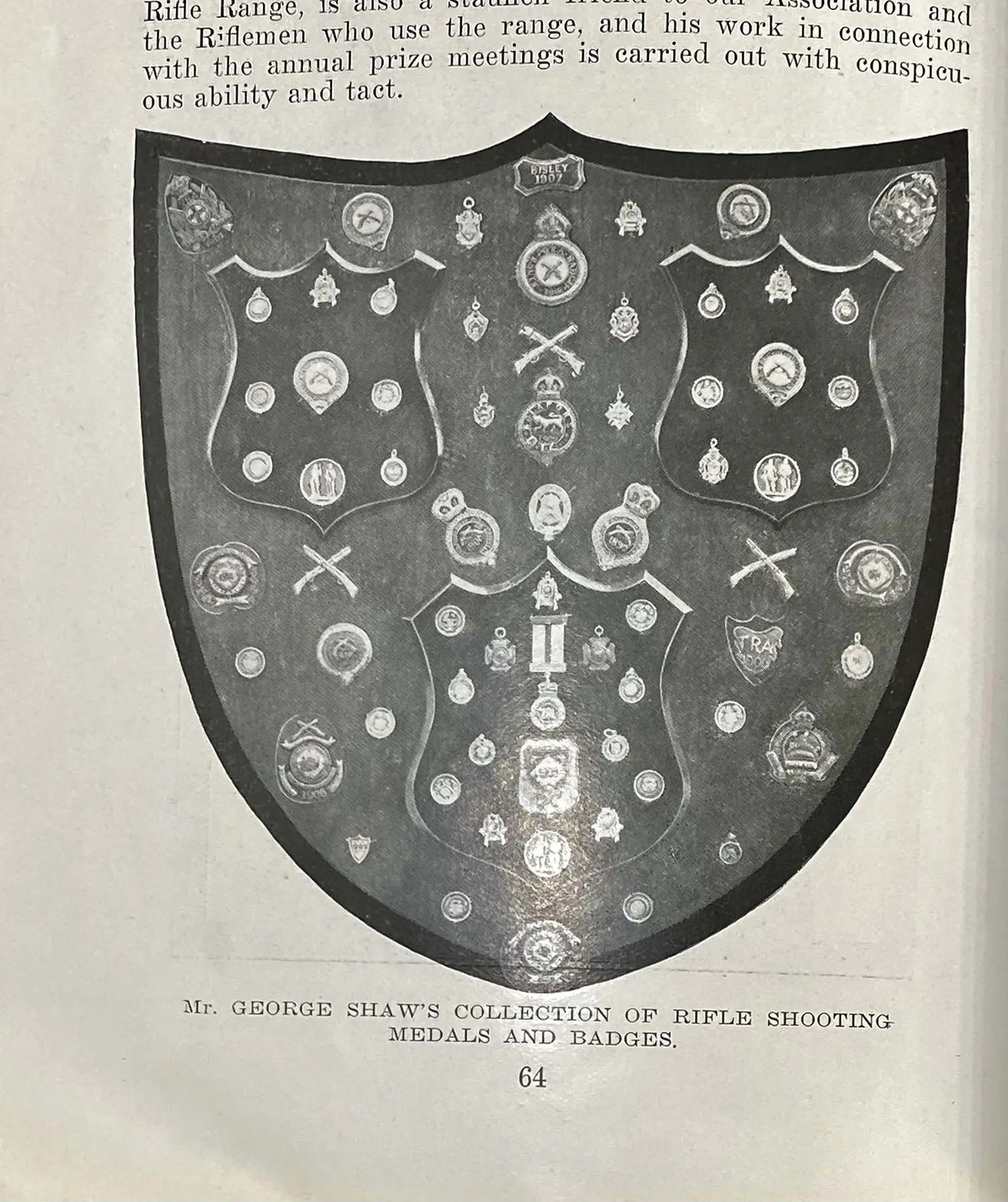
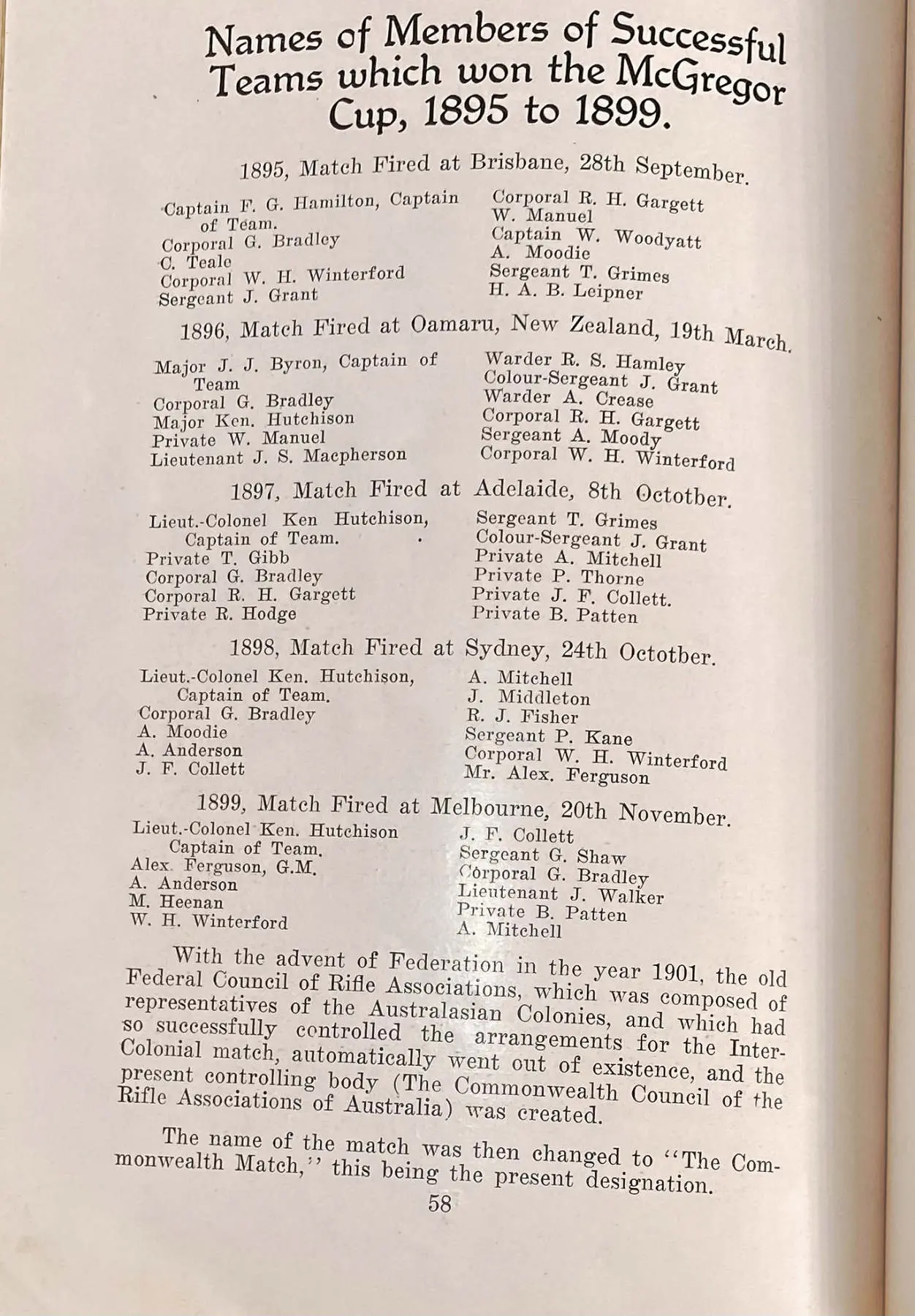
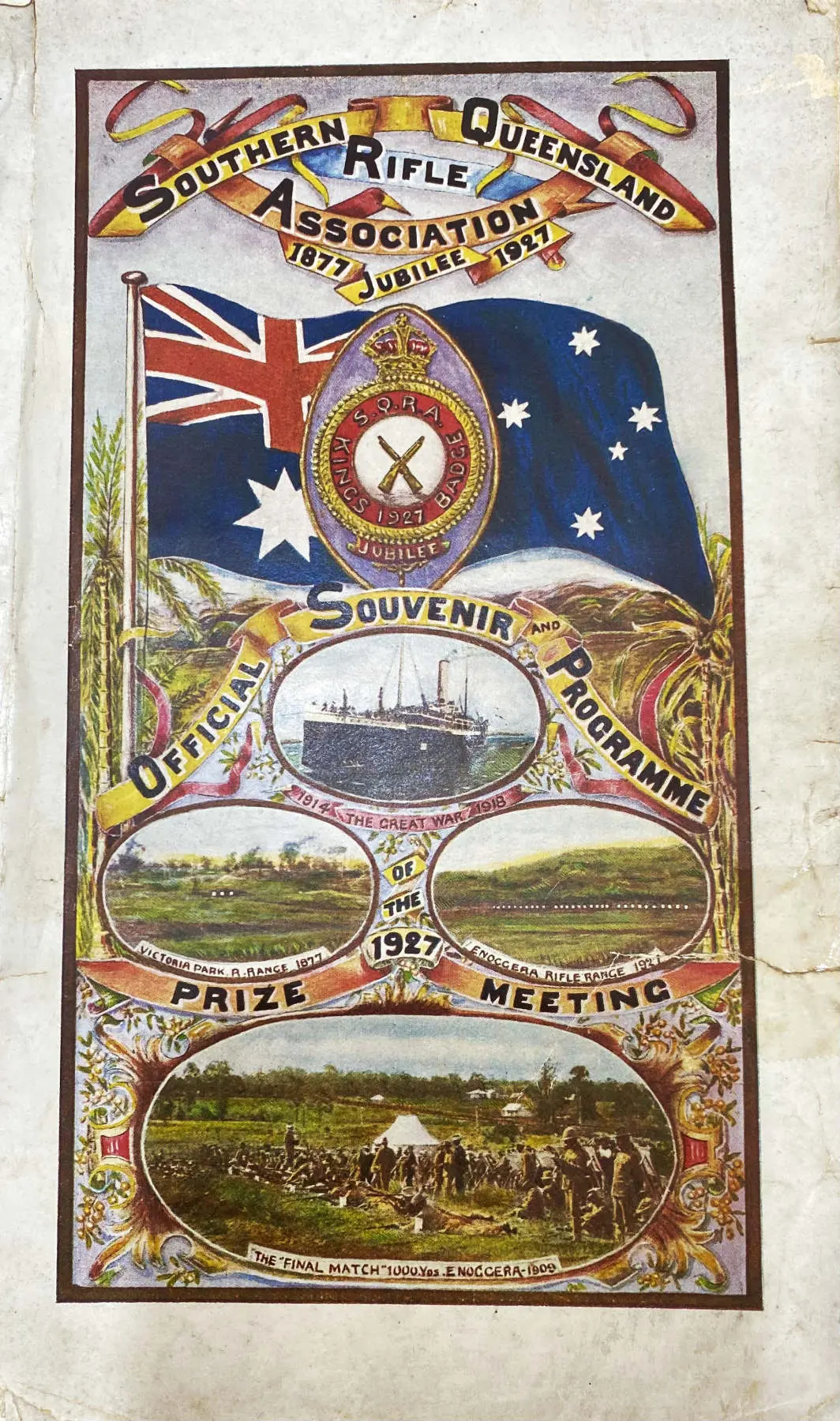
Additional Photos – SQRA Program 1927

Many thanks to Bruce Scott (QRA) for finding these from the SQRA 1927 Program.
(Click images to see full size)
Mobile images not displaying? Please disconnect VPN

copyright 2010-2025 laurence shaw | all rights reserved | contact me for original file sizes or use