

Introduction
I am not an historian or familiar with USA history, but I did some research on this topic for friends.How did people in the Civil War era respond to change? I assume there was turmoil. I assume leaders fighting for pro-slavery had identifiable psychological characteristics and backgrounds, perhaps self-righteous, seeking public approval by like-minded, or even people who just lied. I don’t think in this enormity it is excused by whitewashing or ignorance. It begs the question, how does the mind work, because enforced labor is brutal, against the rights of free will, and designed to permanently enforce inescapable slavery.
Slavery of various forms is in the millions today such as people in overseas scam centers, imprisoned at gun point. I personally had a glimpse of slavery. An Arab father with sons and security guards went to the swimming pool at the Forum Towers, St. Leonards, where I lived in Sydney. Their slave was really efficient, fast, and obedient, racing around doing everything to be done. I felt the slave was out of sync with who he should be, concerning his rights, his age and development. Being his own person was not present in this setting. The father was stern, posturing as he and his sons by force ignored me, despite my close proximity. It was absurd seeing this silly posturing. Qatar ranks among the highest for modern day slavery.
What I find stunning today are people who say slavery is okay, re-branding it, saying those in slavery are better off. This reflects faulty thinking, at least, diverting away from the issues, covering uncomfortable or hardened consciences. Referencing slavery as acceptable in the Bible is a convenient justification when in fact, it was not acceptable. (The Exodus, maximum years of service, St. Paul’s reference to obtain freedom.) I think people at times propose arguments that are completely outside of their own experience with no substantive connection to reality. Or, an argument seems reasonable, only because it is confined within its own boundary. Even so, how could people believe that African Negros were by nature, “sin”, some kind of separate creature from the rest of humanity. That is the evil. From there, various arguments follow – e.g., people could say slaves were not entitled to learn to read books.
Dehumanization is serious, so, applying superficial arguments from other non-serious/allegorical situations is not only a mismatch, but reprehensible. An example of mismatch – we have poor people. always will, and must. Therefore, we will have a less privileged segment of society as slaves. Equating poverty with slavery is not an appropriate justification.
This is more complex than seeing obvious flaws in the Civil War era arguments below. The bigger question is how we can apply what we learn today to other areas of our lives tomorrow with similar underlying principles. I think we all fail to make these connections, so it is quite exciting when we do pick up on this.
Statistically, those with 100% confidence in their views, who may thrive on that emotion, make more mistakes than those who are in a more balanced spectrum of confidence. This raises many questions about those around us who lead or influence. Thornwell (below) refused to change his confident, yet harsh views on slavery even until his death.
I find examples of disturbing lack of clarity in thought and viewpoints on various issues, clearly and severely flawed, from “good” people I like, but without any valid substance that can be justified. This imposes limits on how a person is able to relate to others, and the world around them. But how did we get there? I can’t answer that because of the complexities involved. But again, it raises a warning about leadership and the nature and qualities of what is right or just. What is “right” in a sense sits peacefully with its own truth. What is not right justifies itself with constant expenditure of effort. I am sure those against slavery were constantly surprised by new arguments they did not see coming – like, slavery has always been with human kind.
It must have been difficult for those who were seeking truth as Church members of the day to hear from the pulpit that they were not allowed to discuss the matter, that slavery was a just cause for the foundations of humanity itself. We find such equally confident people today who single handed cause division and loss of Church members, stirring emotions and popularity for those who want it. It is perhaps spiritually criminal to preach to Church members from the pulpit that Israel committed genocide, when despite the intensity of issues around war, there was no such directive or alignment with the Geneva convention’s definition. I would assert bad leadership intentionally picks topics that cause disruption and highest agitation, rather than finding issues we should be considering. Hence I raise the question of how we raise our awareness and clarity of thought, seeking to develop at least a little further, the ability to cross-reference principles and lessons from one experience to another, one situation to another. It becomes an interesting question, what is human development?
If we only see those yelling out loud that President Trump is King Cyrus, the greatest person in thousands of years, or alternatively that Trump is the anti-Christ, we are listening, in my view, to the wrong people, as this is not evidence of good human development. Where do we want to be?
Those who wanted slavery promoted an “us and them” harmful if not actively painful condition. What do we do with this?
I think it advisable we do not become slaves to someone else’s bad actions and arguments. We have a built-in tolerance level that at some point says “no”.
The information below I derived from various sources and re-iterated with chatGPT. See what you think.
Slavery around the transition period of the American Civil War
James Henley Thornwell published a pamphlet for pro-slavery that was accepted unanimously by the Presbyterian Church in the Confederate States of America.
After the American Civil War, the Presbyterian Church was absolutely confident that Africans were cursed, deserving slavery. Everyone agreed wholeheartedly. Theologians with qualifications and subsequent acceptance by people for their authority, declared (1) slavery was not sinful, (2) it was sanctioned by God, (3) the Church had no right to interfere with a civil matter, (4) and that abolitionism was wicked and ruinous. Therefore, the issue should not be part of the Church discussion, but civil.
As atheists were communist, and as they opposed slavery, it was right for Christians to support it. This battle to support slavery represented the progress of humanity itself. Thornwell stated there is a natural ordering in society based on country and race. It is natural, biblical to support monarchy, aristocracy, and existence of poverty.
Human rights were therefore subordinate to the God given hierarchical system. Slavery fulfills the person’s abilities and duties. Rights as enjoyed by other men are morally denied them because this is who they are. Liberty, truth and virtue belong to those fit to possess them, as assigned by God to each white person – a holy decree. Africans were in a state of degradation in bondage even though they co-exist with whites. Considering their life in Africa, they have been given gracious Providence being brought to the shores of America, taken out of sin.
Having existed in all dispensations, scripture sees slavery as lawful and cannot go against itself, so it is love and justice to have slavery as a lawful relation. Slavery is universally natural and is therefore Divine. All peoples, philosophers, statesmen and nations have accepted it. Thornwell stated his own exposition of “common sense” was thereby agreed with scripture.
The source of the claim was that the Bible records God’s judgement against the sin of the people of Africa – from Genesis 9:20-26, Ham’s sin against Noah is taken as a man from the black race (however, nowhere is this in the bible). Ham’s curse justifies slavery, but slavery is not applicable to Canaan who was white. Therefore, the white race is exempt from the curse, and Ham’s curse is applied to all descendants thereafter who are dark-skinned.
A Jewish Rabbi interpretation for this was passed down through all ages, where “blacks” were constituted as evil. Because the person is enslaved by sin, slavery is justified (Augustine in the “City of God” – “the condition of slavery is the result of sin.”)
This had a host of consequences, such as African descendants have inferior moral character; unable to attain to the level of full white civilisation; wilfully choosing sin ( and much more).
Southern Presbyterian churches were deeply embedded in a society that depended economically on enslaved labor, especially in agriculture – cotton, tobacco. Many church leaders and members were slaveholders themselves and benefited directly from slavery. A paternalistic belief held that slavery helped “Christianise” and “civilise” African people, supposedly for their own good. “Negroes” could be educated on these matters.
Over time, Presbyterians in the North became more abolitionist, while Southern Presbyterians dug in, leading to formal splits – e.g. the formation of the Presbyterian Church in the Confederate States of America in 1861.
Perhaps the reader may think of some of the obvious flaws in the above views on slavery. For example, leaders telling the Church congregations not to discuss the matter.
Thornwell: “FOR THE BENEFIT AND INSTRUCTION OF THE COLOURED POPULATION”
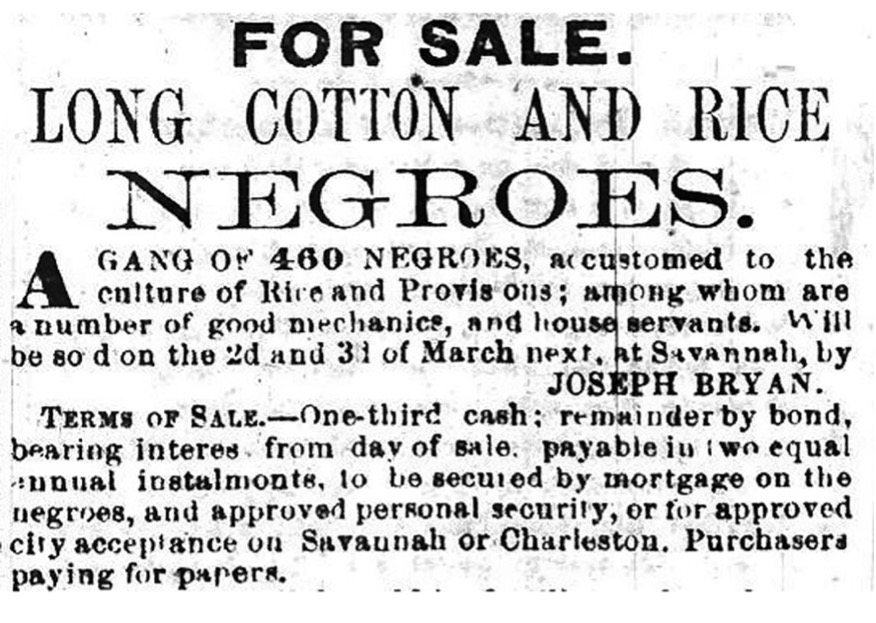
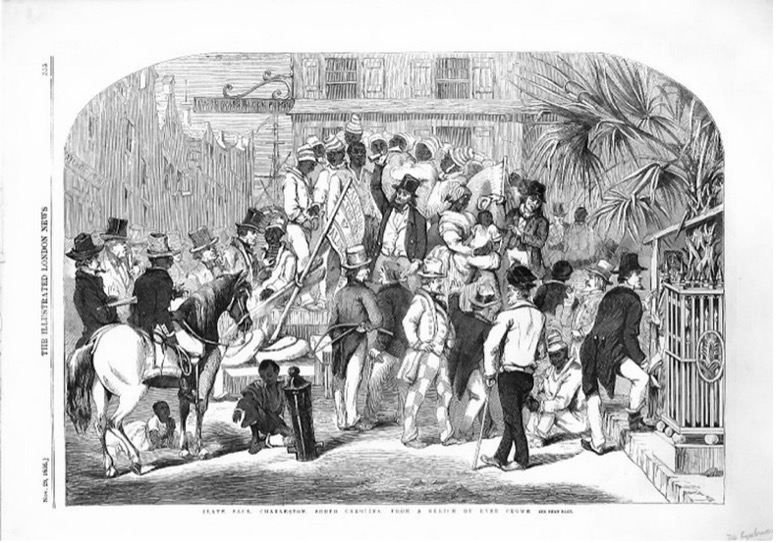
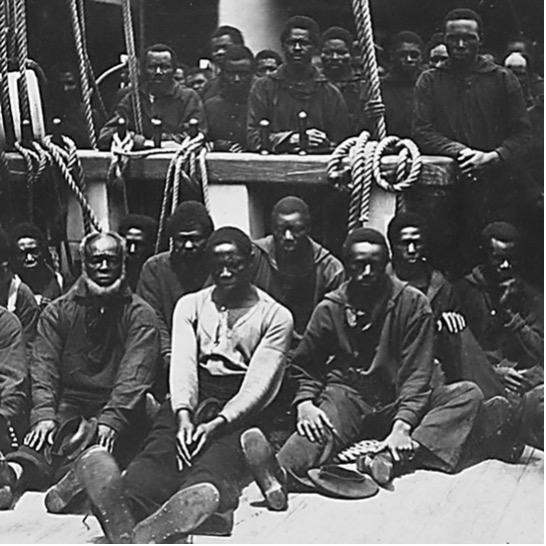
Images of Slave Sales, South Carolina, c.1850’s
Commentary
I am not an historian or familiar with USA history, but I did some research on this topic for friends.The lines of thinking presented here open more questions around the brain and human behaviour than answers. The blaring faults in the arguments that people held for pro-slavery have to have more human “physics” underlying them than what we typically say. Perhaps we need to take into account how the human brain works, how we as people are, how we react and behave, not just the obvious flaws we see in the false justifications described below for slavery, as in the Civil War era.
For example, Covid-19 lock downs and public communications instilled a pattern of fear. That pattern was learnt, via external conditions placed upon us. The pattern was not removed after Covid, because the brain learnt a new pattern that does not by nature simply vanish afterwards, even if what we learnt was considered complex and in sync with some survival requirements, or in other areas, such as later with the Covid variants, completely wrong.
We saw black body bags, but some of our friends said these were not real but fake. We have to start thinking about the way the mind works, which means in this sense, it is not about right or wrong, but what the mind is doing. I know I had to relearn how my mind approached information. I was perhaps thinking within boundaries of ignorance too, but my thinking was reasonable. We knew there were past viruses passed on from animals. But as information entered a more exposed era of deceit and lies, I had to come to terms with the virus being deliberately targeted at human beings from a lab and those involved – even though we probably still know very little.The thing is, I was not confident. I was open to change as information came to hand.
Perhaps those who say slavery is okay reflects a pattern of confidence, that for them feels good, self serving. A pattern that does not open new avenues for new thought or revised thought. If we challenge people like this, we may be greeted with hostility, which is a sure sign that the person is inflexible and not open to change in general. We see this confidence and inflexibility in other areas of people’s lives, and wonder why is that person unable to change, why do they hold strange views that have no sure basis?
How do I handle people who insist the earth was created in seven days and is no older than 10,000 years. Their confidence is absolute, but it is highly flawed. It means people have to invest time in other supposed facts to support that view. It feels good to have a delusion support a delusion. It feels good to have others who “sin” the same as me for my own “sin”. Let’s all sin together. The problem with that is that no two human beings are identical, so this supposed union between people is brittle. If this is where society has come to after all this time, we can’t say we are that advanced because handling truth, valuing truth, seeking truth is somehow still under the water, out there somewhere under the ocean.
It is a natural condition for us to want answers, even when considering global issues that we have not extensive grasp of. When crisis strikes unaware, people search for an answer to find help to the inner being. This may be an answer of partial truth, or completely in error. The physics at play is a need to find an answer and bullet proof it in any way possible.
When a school in Sydney experienced trauma over a murder, people were numbed and stunned. There was no satisfactory answer, but an answer was given. This helped calm the inner trauma. The answer or explanation was that the act of murder was evil, and shows that evil exists. (Yes, there is evil and malice, but the point I make is that without a clear answer, a profound energy was focused on removing the pain and finding an answer that I feel was actually very insufficient. Fortunately one person did provide a way forward – not an answer, but to recognise how we feel in this tragic time.) How do we handle such huge issues. Surely enforcing a human being to labor, to chain them up is huge. One way is to objectify “evil”. The person is evil. Evil takes on a persona, not just an act. I am not being unsympathetic, but looking at what we as a people do. We will find many arguments in each generation as to what is right or wrong. This is the problem we come up against continually.
Some crises do not have an answer. This is hard. Very hard. We do not have an answer to knock over an impenetrable wall. This is perhaps one of our greatest challenges as human beings. Never ending justifications are never ending because they do not work. Peace does not work this way. What we repeat over and over reflects something about who we really are. I would suggest, and as from historic accounts, Thornwell never changed his arguments for slavery and was incapable of doing so due to his human condition. That means answers have to be found another way, and that battle ensued. Today we have church divisions and splits, but what is the foundation of those splits and spin-offs? Clearly Thornwell kept status quo, but sometimes today new churches are founded in ill principles underlying the split, rather than old ones retaining the “illness”. A characteristic of a person who is able to develop is to work with these human conditions even in the life of the church. A shallow response is to reject and learn that impacting pattern. I think that is very dangerous, but during my own life, I look back and see where I did the same thing.
So, how did people in the Civil War respond to change? I fairly assert, there were people who just lied. I assume there were those persuaded by deceit. I assume there were those who questioned. A simpler “mode” of the mind is to accept what is blatantly stupid in some cases, and perhaps a training of the mind to accept what is not real as real. Narcissists and drug addicts do this all the time.
If the mind learnt that slavery was immoral, could one make a jump to some other platform, and equally see that something else was right or wrong? I tend not to think so, due to our own limits or where focus is placed. People seem to choose what suits a narrative amenable to them, what feels safer, regardless of harsh reality. A false view today, that slavery is okay, (which some hold) is a shadow of those in the past who believed it was still okay. This is the great question – what is really going on in the mind? Are facts and clarity given lower standing than delusion, as even delusion carries some kind of emotive backdrop.
We know for example by observation, we only handle so much information, memory capacity and short or long-term capacity also play a role. We know that adults can become highly disturbed and upset in some circumstances if questioned on fundamental life issues that we may think they should have tackled during their life and have some array of answers.
We also know that trust and confidence is a way the brain works too. If we have, say, limited memory and mind skill sets available to us (which is not a judgement) that we can only process information a certain way within such boundaries. Everyone wants to feel trust and confidence. This is not about right or wrong either, but the sense of stability within us, of a need for security, of emotion.
When a person thrives on the feeling of confidence, they statistically have to be making more mistakes than the person with less confidence. 100% confidence is actually a killer. If someone loves teaching, is it the love of teaching, which may be real, or is it the love of feeling right, or not even that, but the love of the feeling for high confidence. As time is invested in feeding this feeling, time is not spent on understanding a better reality, such as things like outcomes, side-effects, empathy and so on.
We are perhaps familiar with Church leaders going off track, so that at some point later in life, their patterns of behaviour are no longer tolerable, so people are removed from office, corrected, or people leave a congregation. If one person can break the stock market, one person can break a church. This is why excellence of leadership is most important, and raises the question, what is actual human development? Happy, confident people, extroverts, those making the most sound doing all sorts of things for society is not the real gauge for leadership.
I would suggest some aspects of what I’ve mentioned would come into play when congregations were faced with the issue of slavery. But what disturbs me today, is why some still think it is okay. I have not spent enough time on this thought as yet, and am trying to learn more about it.
For now, let’s put this aside, and look at some obvious faults as you read the points below. I notice several areas of concern. See how you go with some blaring flaws in the arguments presented below for pro-slavery. (Information derived from various sources and confirmed by chatGPT.)
It stuns me, that there are still people I know who say slavery is in the bible so it is okay, and slaves were better off. Slavery is forced labor, which is immoral. If we break that clarity for some hazy reason, our minds are not able to grasp clarity on various other issues. The condition of slavery is what a person was in at that time, and to leave would mean being as worse case scenario, killed! It would be stupid to preach under Roman rule that slavery must be abolished. People are not all ignorant of truth, and many would well have known the yoke of slavery as well as persecution.
If we say slavery is okay, we must logically say persecution is okay, because both share pain and suffering, threat to the core of a human being’s freedom and life. We usually do not see such connections, but when we do make connections, they are more real to us. Saying that the Apostle Paul mentions slavery is out of context, because people well knew what their society and government was like in those days, and Paul actually says if you can gain your freedom, do so. Slavery is absolutely unsupported in the Old Testament, as in the case of the Jews leaving Egypt. What could be clearer? And when they wanted to go back into slavery, their hardened hearts led to that older generation dying in the desert so the next generation would not have slavery in their bones and blood.
So here we have an example of a shocking set of facts around slavery being put aside for other views that don’t even hold up. This is a huge concern. Why does the human mind do this? I think people sometimes cannot jump from one reality to another, especially if they have not experienced it. Worse still, is not being aware of what one’s mind is doing. What am I actually thinking? What am I actually doing?
Another concern is that when people see a true moral principle (not a concocted principle that does not hold up) there is an observable inability to apply that principle to other matters requiring the same principle. As an analogy, a person buys chicken at the shop and checks the use-by date, and before cooking the chicken verifies it does not smell off. However, that principle should also be applied to buying salads and greens, but the person fails to make the connection and hence eats bad food. A dumb example, but switching from one situation to another shows an inability to apply a general principle. As a real life example, a person suffers ostracising their whole life for being genuinely obese. After surgery, they are no longer ridiculed in public, yet, the person ridicules, ostracises, and rejects other people with other problems, not wanting to see what the real picture is, some other context. It is like a documentary on TV where an ex-Iranian prisoner after being released form torture then says he will do all he can to torture and kill Americans. The lesson has not been learnt.
There is much not stated in the article below. For example, slaves were barbaric, they were not allowed to read, they could not touch things that white people would touch due to disease. I am confident (ouch – may I have this latitude) Noah was not white. SO, what do people do when their arguments are exposed as flawed? They may want to stick to them, so they could say, well, dark-skinned instead of black. This is pathetic, but happens every day, everywhere, on every issue under the sun. And that means, the things we hear never end, constantly stunning us as we see the next unbelievable thing happen or spoken.
There are known cases of forced labor, modern-day slavery even recently seen in Australia via the Courts. There are overseas scam centers where people are imprisoned at gun point, and various abuses such as trafficking. We may have to admit a certain naivety and be humble about that truth, but that does not mean our thinking should justify an acceptance of slavery because of that naivety. I think this is a huge problem that crosses over to other matters in life, and without clarity of thinking, a certain malaise for bad outcomes is more likely.