

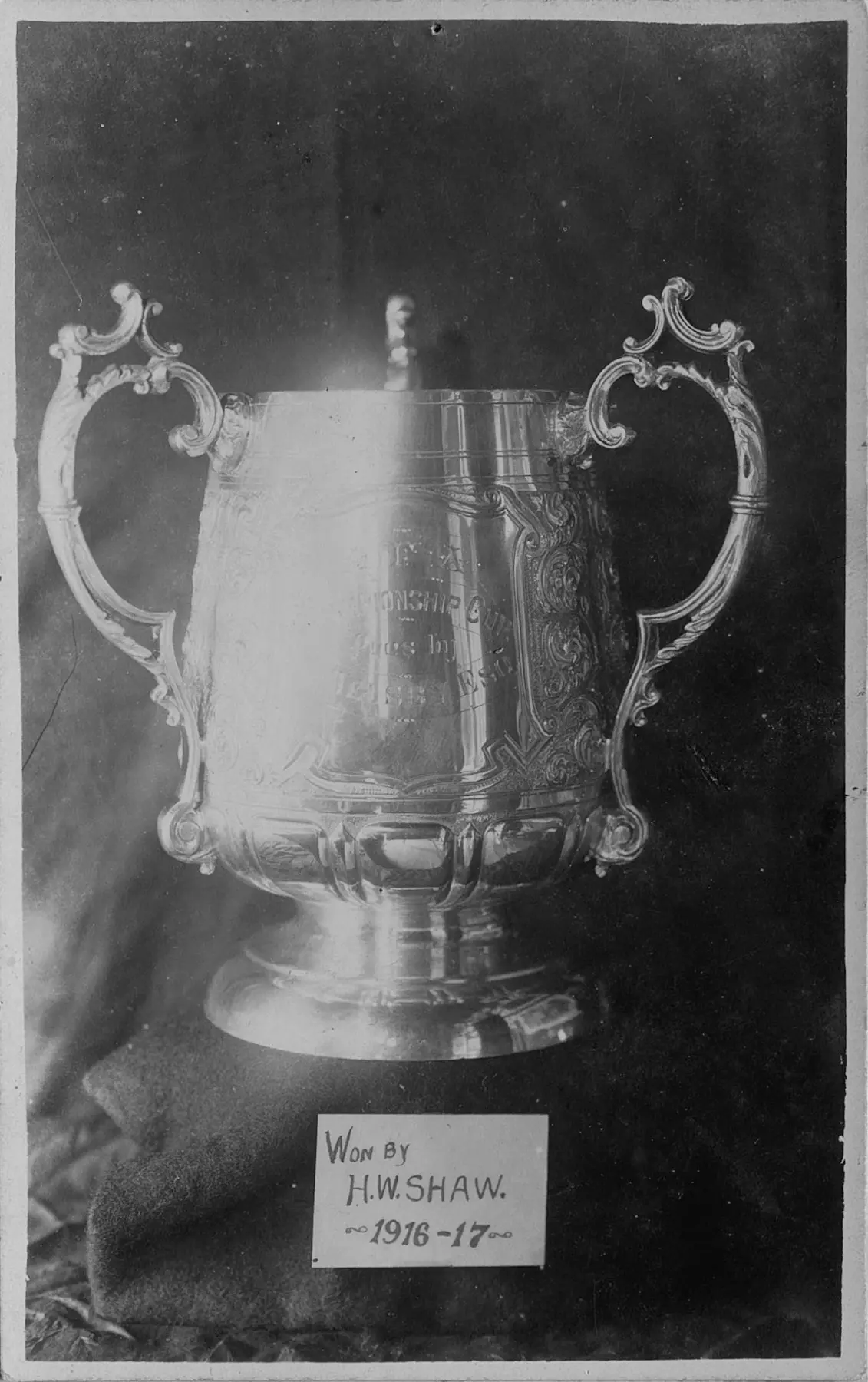
George Shaw & Sons – history
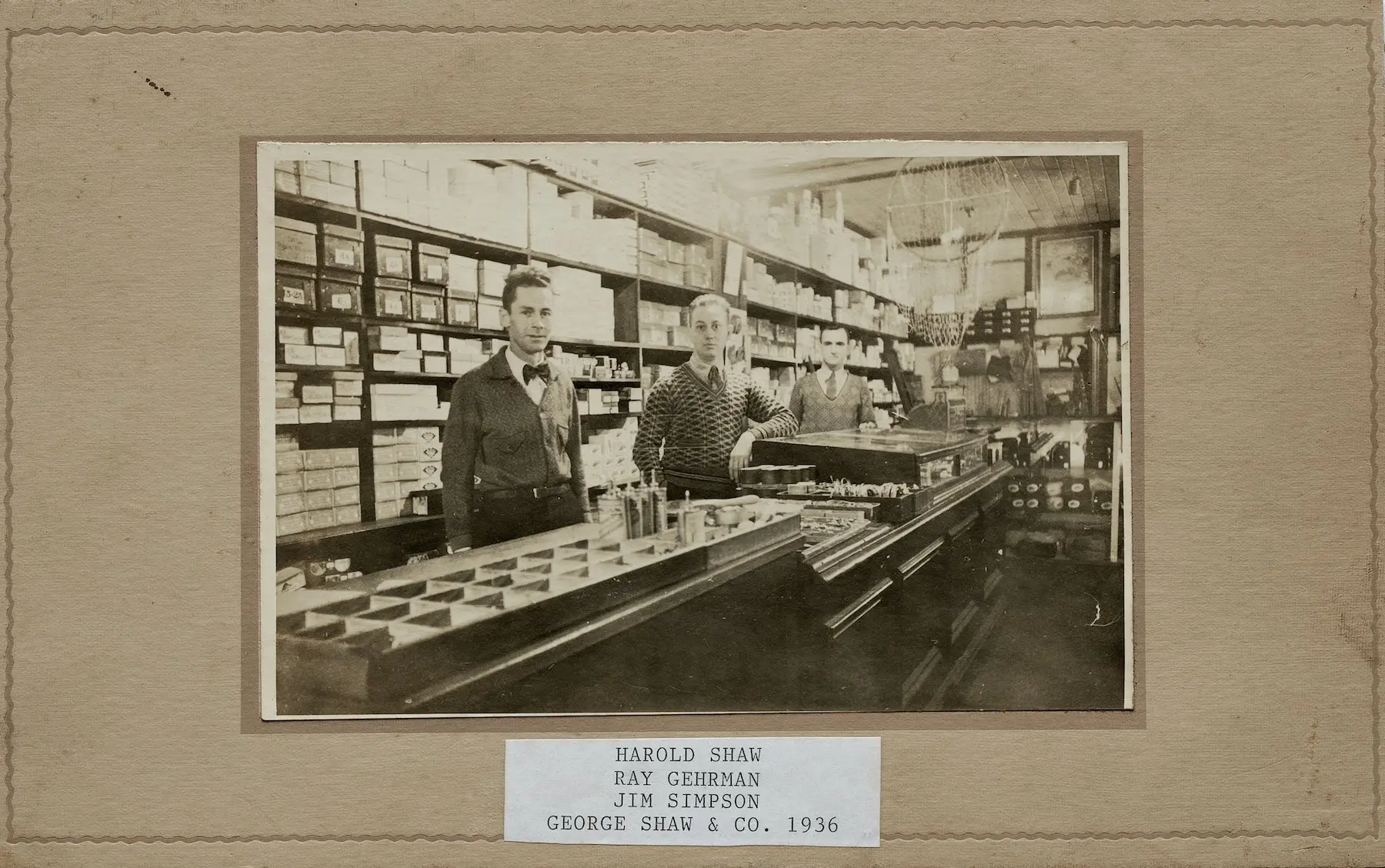
Our Shaw family history goes back to George Shaw senior, son of William Shaw and Mary McCurry, migration from Ireland to Australia. The Firearms & Fishing store in Albert Street in the early1930’s, and Albert street i general, appears to have no digitised photographs on record. The same can be said of many city streets. A few original photos are now with the Brisbane (QLD) State Library archives, June 2022. These can be seen in the “blue” folder called George Shaw Sports Store 1908 – 1979 on this website.


George Shaw Sports Store
1930’s – 1970’s
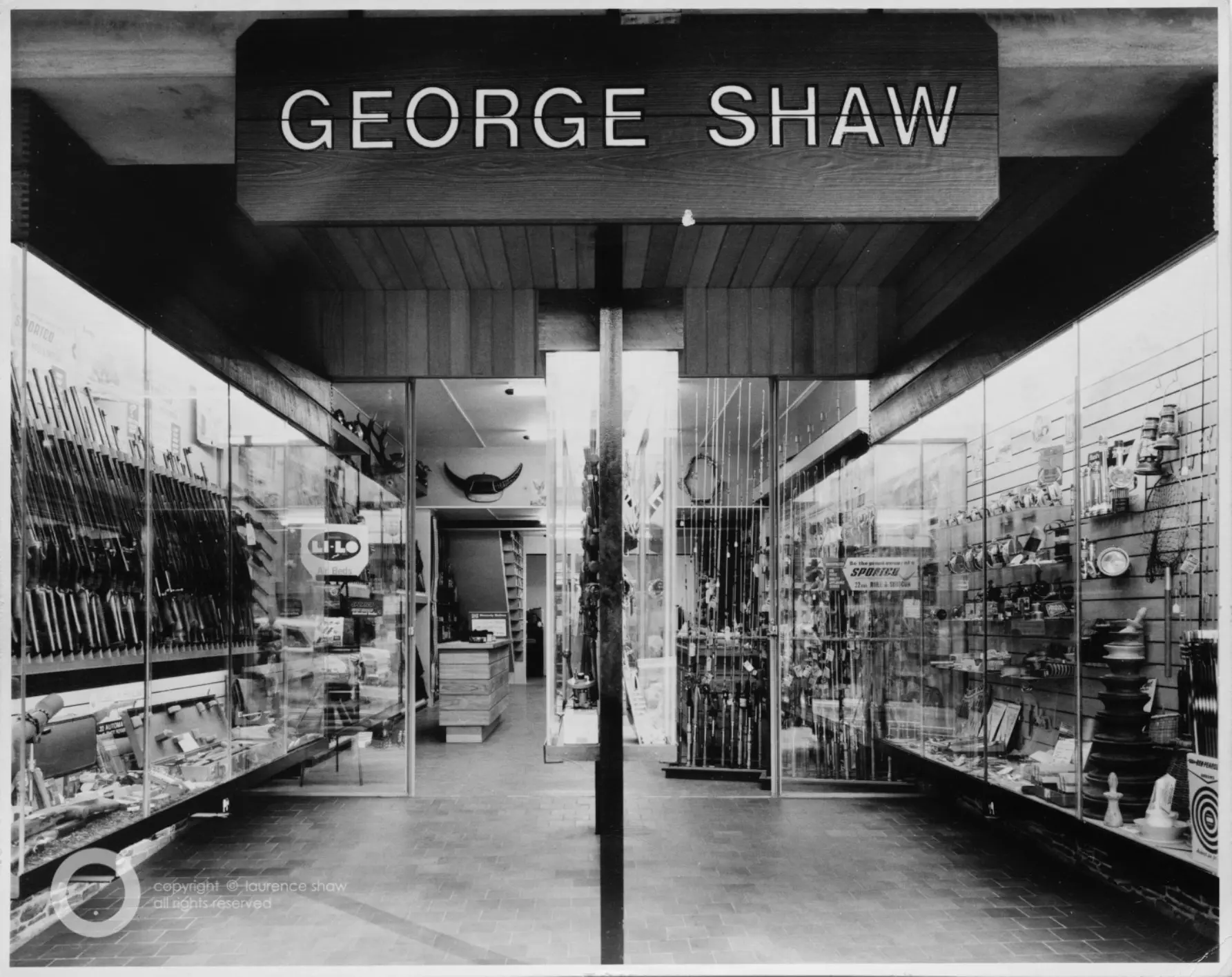
Firearms | Fishing Tackle | Archery | Sports
194 Albert Street, Brisbane
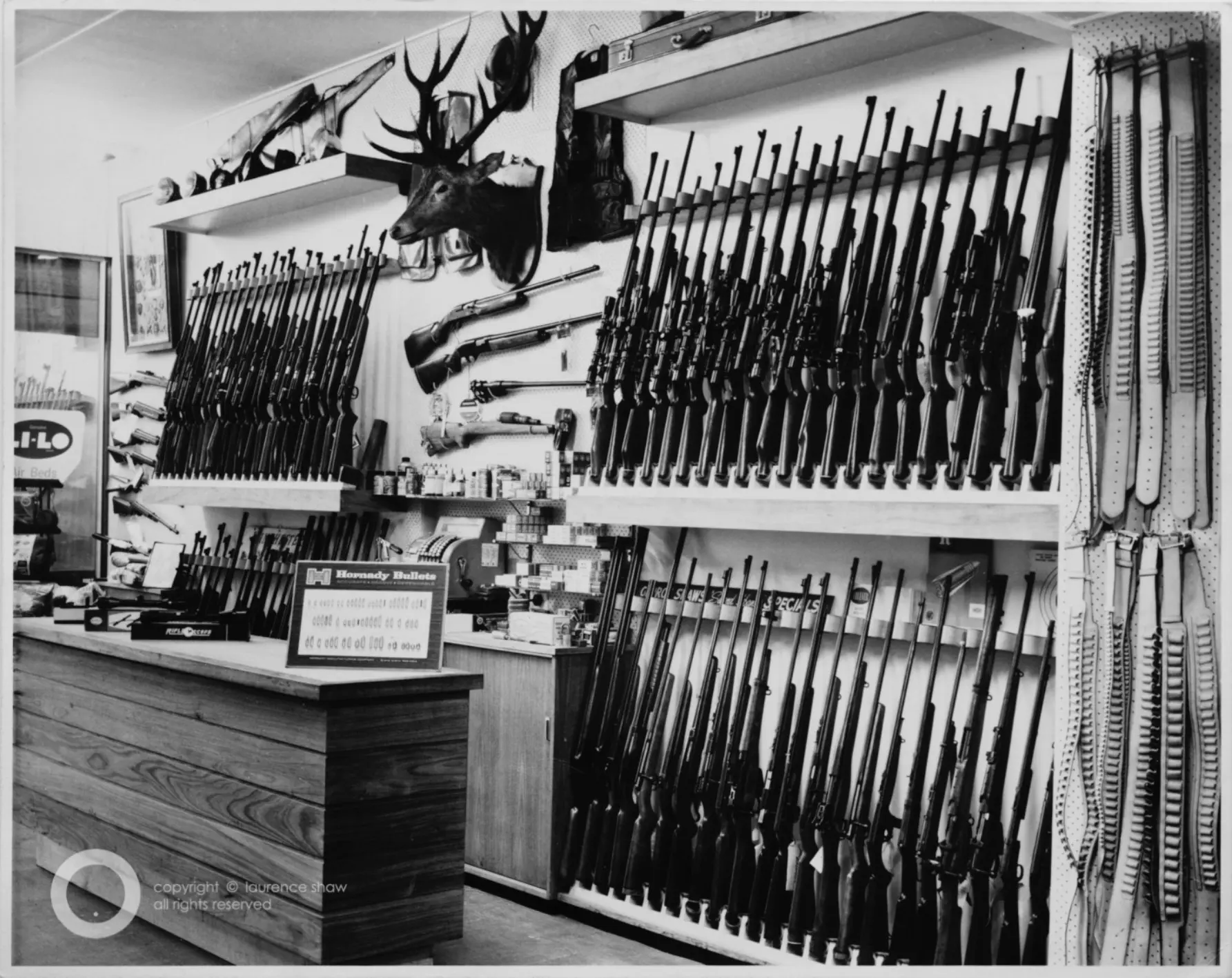
George Shaw & Co Pty Ltd
Albert Street 1930’s
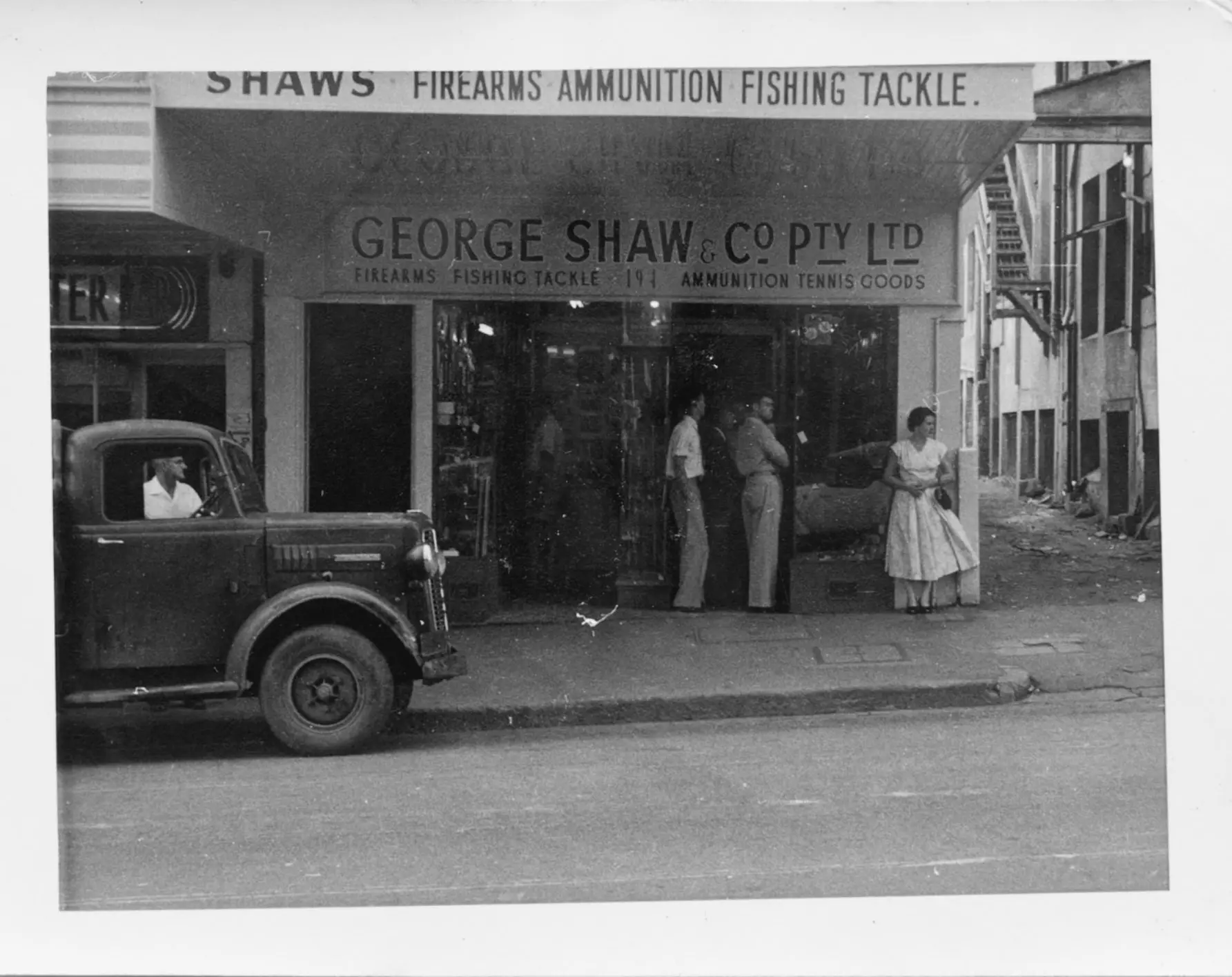
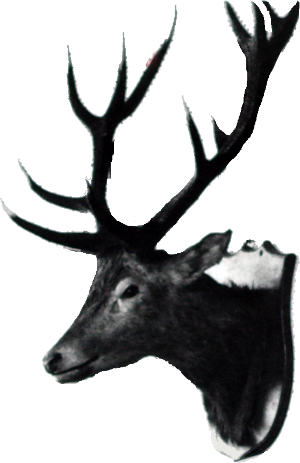
The mounted deer neck was in Dad’s shop. I don’t know what happened to it. In those days there was hunting as a sport, deer and kangaroo skins as a norm for various people.
Website Terms & Copyright
This is my personal website.
Content is protected under Australian copyright laws, all rights reserved.
To use any images please contact me. View Terms
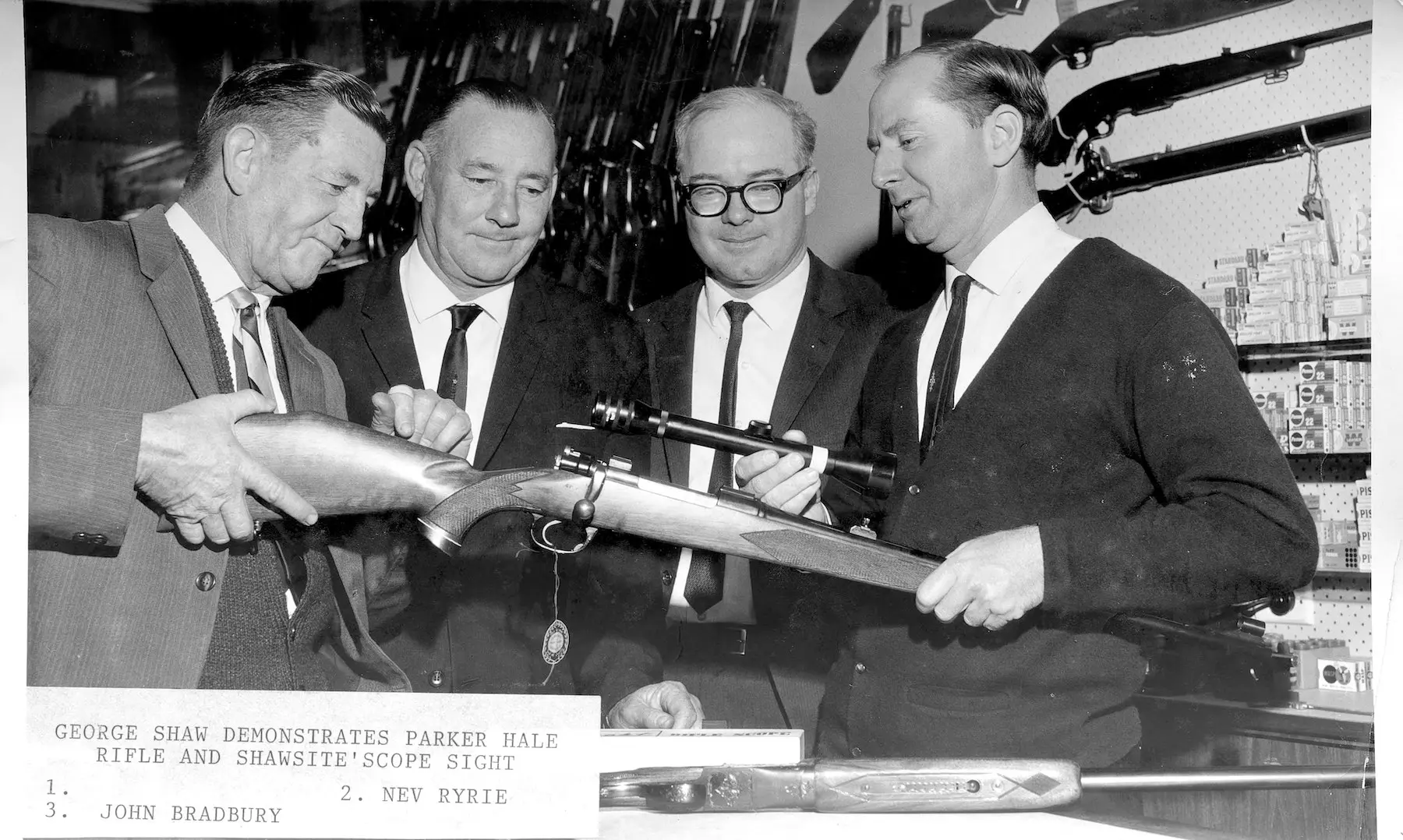
George Shaw & Co
The Stores – A Commentary
What I think is interesting is that the lane way beside 194 Albert Street always had the same odious smell regardless of the renovations over the decades. Personally, it was not nice seeing Dad called out from Moggill to the city when the store alarm went off, (metal wires across windows) or Dad falling asleep at the wheel while we yelled at him to wake up. The building was once broken into from the adjoining shop’s attic. The brickwork mortar was like powder in some places. Wallace Bishop later put in steel reinforcing rods to strengthen the building.
Despite the rough times, the thefts and staff abuse of discounts and stock, the store had some good people we really liked and remember very fondly.
Dad had a gun smith workshop. I used to carry repair firearms down Queen Street to Robinson’s Sports store. Later we had to ensure guns had carry cases. Then soon after, of course, no guns allowed. That is how it was then.
I recall when a white painted line was once put on the footpaths to keep people left and right. Unbelievable stupidity, so even as a kid in high school I knew that. And of course we would then get aggravated if someone walked on the wrong side.
In those days hunting was well known and there was nothing wrong with animal skins and trophies, as you can see in the photos. When the store sold we had the deer head at home, but it dripped moisture. I know how amazing the texture and quality of a good animal skin is, because we touched them and saw them as kids. When I visited Denver in the late 1990’s I went into a store and immediately knew which was their best buffalo skin and the owner said it was not for sale. They are exquisite to touch, but rarely seen now. It was also normal to have tortoise shells too! We did not have ivory or any such items now, and Mum did not allow any gun collection in the houses we lived in. When Kmart came in from USA, Dad did not know how to compete with them, but years later he said he would have been able to keep the store going with the knowledge he gained about them. Dad had quality products which suggests this could have been part of a unique position. In those days people did not know about consultants and so forth to help businesses.
It is hard to recall childhood memories with Harold Shaw. I recall Dad traveling to/from the Woolloongabba store and the train soot on everything in the area. Dad had lost a sum of money from someone purchasing guns and never paying.
I have various memories of the Albert St shop in the 1970’s and the city activities – such as going to the cinemas – Mary Poppins, Earthquake, Jaws. It was in the shop I played with an IBM golf ball typewriter. We had Bakelite telephones to play with. Up from us was a deli that sold real milk shakes and rocky road, deep fried potato scallops and Chiko rolls with salt. No wonder I loved Ekka pluto pups.
Dad’s store sold firearms, fishing, archery as a new line, ammunition, explosive powder, binoculars and telescopic sights, later pistols that the police purchased, trophies, torches, hunting gear, and knives – big knives. There was a gun smith workshop on the upper floor. Dad tested a firearm in the workshop which failed, and splinters of wood flew out sending Dad to hospital, and Dad then had tinnitus. He could have lost his life. His energy or enthusiasm for the store dropped after that. Later he worked for Robinsons. He (legally, I have to say allegedly) unfortunately had enemies, lies, humiliation and a large loss of money from his stock not apparently not being paid for (?), or his superannuation given to him. I can only recall the family pain over this and Dad’s failed attempts to find justice. Those days are well gone now.
I always really disliked selling retail, and never understood the selling points customers needed. Dad learnt his detailed knowledge from another person who passed it on. When I was in high school, a double bladed Gerber hunting knife fell off a glass showcase cabinet while I was showing it to a customer. It did not cut my tendon – which is amazing.
The shop bought out Watsons Sports store, and then sold every sporting good you could imagine. I never liked selling retail, and people generally asked questions just to feel comfortable, I think. The previous handover to Harold I think involved the Kingston Brothers around part ownership.
I would like to note that my Dad knew all the key sporting wholesale players in Australia. There is not one person who controlled a major brand that he was not business friends, or friends with, including big names such as Winchester, Tasco, Alvey and more. Dad went fishing with some the big names every year at Fraser Island, piling up the empty beer cans into a pyramid trophy on a table top.
When Dad backed a trailer into the shop laneway he narrowly missed the walls, to load up boxes of trash from the back of the shop. We would burn various records out at Moggill, as they expired after a legal period of time.
My “uncle” Bill, Bill Ward, helped me get my first job in the QLD Government Department of State Works. His shares in the store were bought out. He told me that there was a will written that stated the Albert Street building was never to be sold. That will was never found, and it upset Bill. Bill was deeply upset over the strong constraints of the pension. He had no children from his wife. I used to play their pianola. Uncle Bill divided his inheritance between us three sons, which stopped me from being on the street penniless when I got ill in 2010, so his decision on this was far reaching.
This content is based on limited knowledge and on memories, so again, please take it only for what it is.

 Above Top: Harold with my father George, and big fish!
YES – No fishing licenses.
Followed by: The two shop windows. The left had a room with a gunsmith workshop, and the right had a small partitioned room with basins for chemicals working on gun barrels etc. and a testing apparatus that was highly dangerous, not by intention, but lack of knowledge in those days.
Above the windows was the attic, incredibly hot. This is where some retail stock was, but mainly old records etc. The mid level of the building had the office, Dad’s manager’s office, retail storage shelving, toilets, eating area, and packing bench.
The concrete stairs went down to the lower retail level, with office at the back behind the sporting goods section, a safe, and small area for throwing out cardboard boxes, then the back of the lane way. Fire regulations were thinner in those days.
Indicative diagram of the gunsmith workshop in the room behind the two windows, noting the attic above the workshop floor:
These layouts would not be permitted today.


 Above: views of the laneway in more recent times
Some notes from my mother Elizabeth Shaw:
Hardware merchants in Queen Street, founded by William Shaw who migrated from Northern Ireland – three sons and 2 daughters:
George (my great grandfather), Albert and Henry, Minnie and Annie. (Please see my more recent notes. They had at least 10 kids.)
↑ Go to TitlePhotos of George Shaw Sport’s Store, Albert Street, Brisbane. These images are now with the Brisbane State Library.
Old Photos

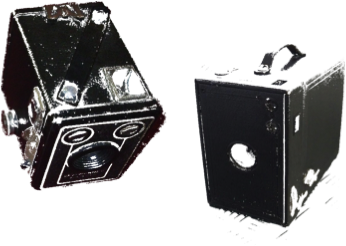
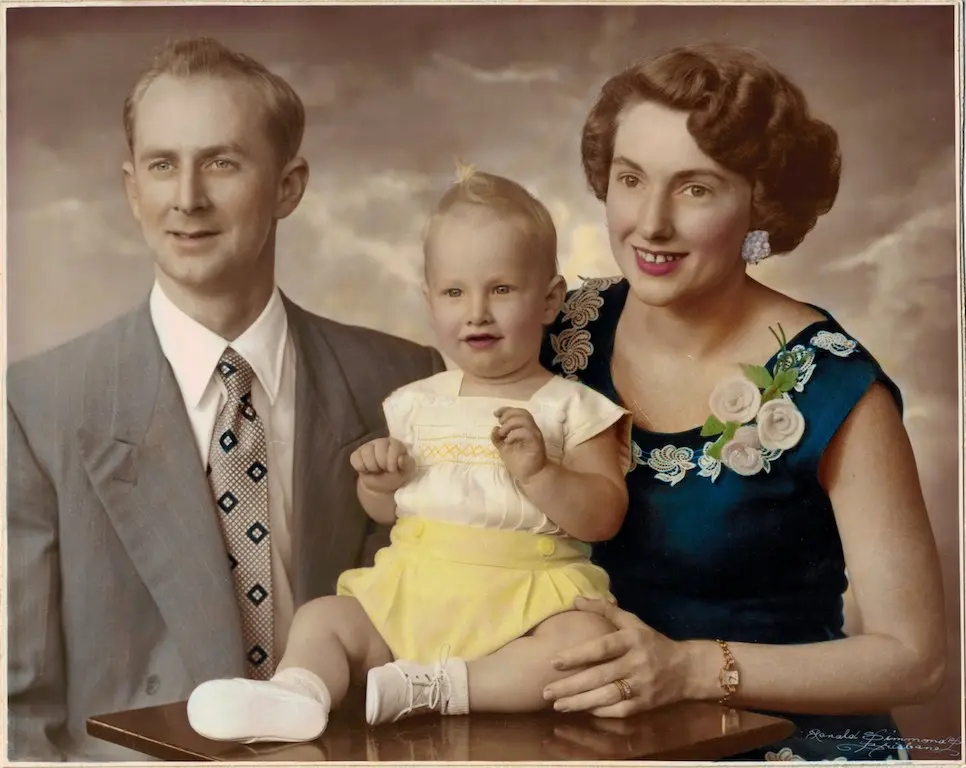
When I moved to Sydney, I had no recent photo of my parents. Some time later, before my garage was robbed on school holidays, I found a carton in the garage with an old role of film. It had Mum and Dad’s photo. Most of the other film was damaged.
This does raise the question of storing photos. We all know what it is to lose photos. Printing a photo means that we take time and effort to show that we value a particular image, and that is more likely to survive for our family’s next generation – provided it is not a cheap print. Since the beginning of the 1900’s, my families have used photography, and we have minimal hard copy surviving. Anything that survives the years is special, particularly when given a photo 80 years later.
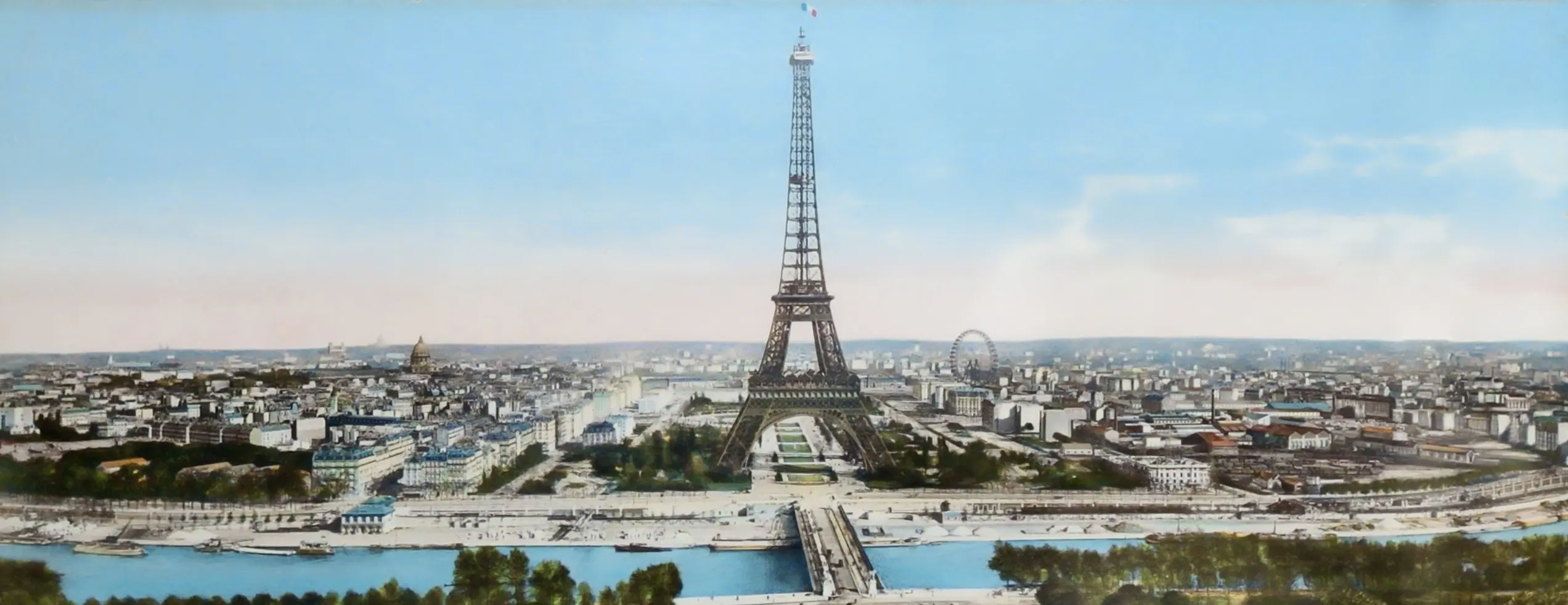
These photos were handed down to me, from when my Uncle Bill’s father went to Paris in preparation to fight for the war. Notice the spoked ferris wheel. I have seen the buildings along the River Seine, which were still under construction, and the railway line is now covered over.
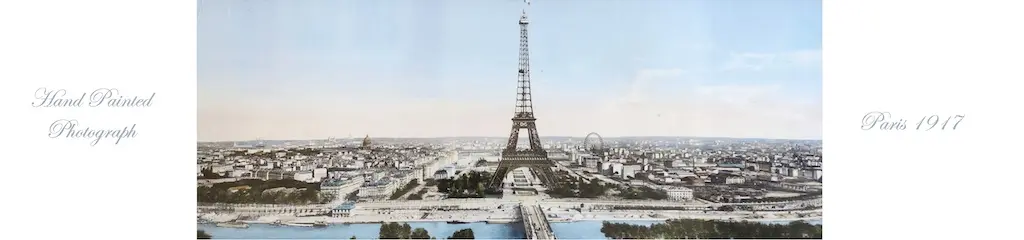
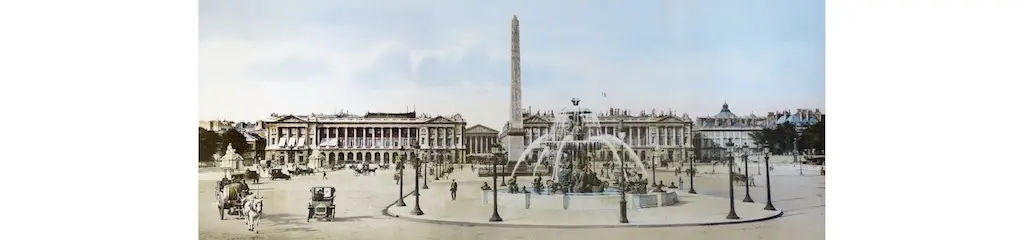
There are experts in this field who have fine examples of historic photography. Our National Gallery of Australia preserves various styles, some snapshots of scenes at hand, and others of historical significance, such as a pose from a politician, or a fashion statement from a prominent celebrity. These have been among my favourite photographs for many years:
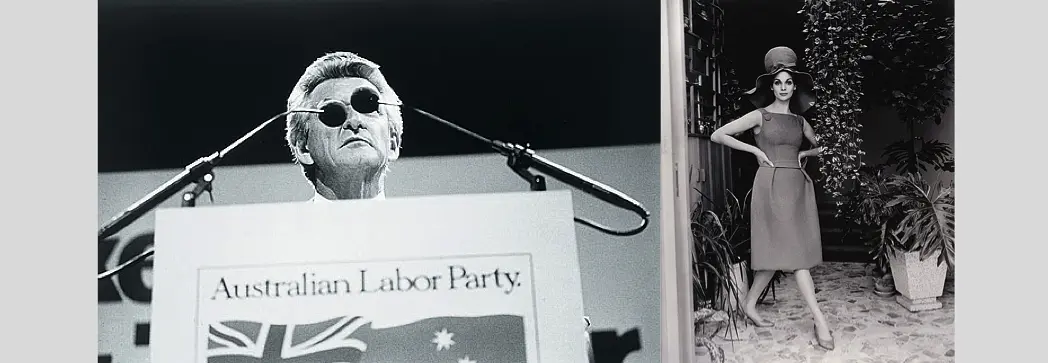
Athol Shmith ‘ Fashion illustration: Maggie Tabberer in Hall Ludlow outfit.’ 1959 gelatin silver photograph.Collection of the National Gallery of Australia

Older style buildings bring back memories of former materials and finishes. Although beautiful, it also brings back memory of controlled mass environments, man as machine. Our corporate lives reflected order, the days we wore ties, and were comfortable in thinking of life long company loyalty. That was an effective strategy. I recall my first government job – what standard ruler and pen I was to use. I have always bought my own pens and unlined paper in the workforce. In my first job as a filing clerk, (one of the most boring jobs in the world) my drunken boss got fed up with me and said I had to do that job for five years before I could progress to the next level, and be a cost order clerk. I resigned. This shocked my parents. It shocked me!
Those were the days when officials showed off their positions of power, carrying bikini tanned girls on each arm, when sexist and racist comments were on display, and when I bought staff their Bex powders at morning tea. Only pies, sausage rolls, and cakes in those days.

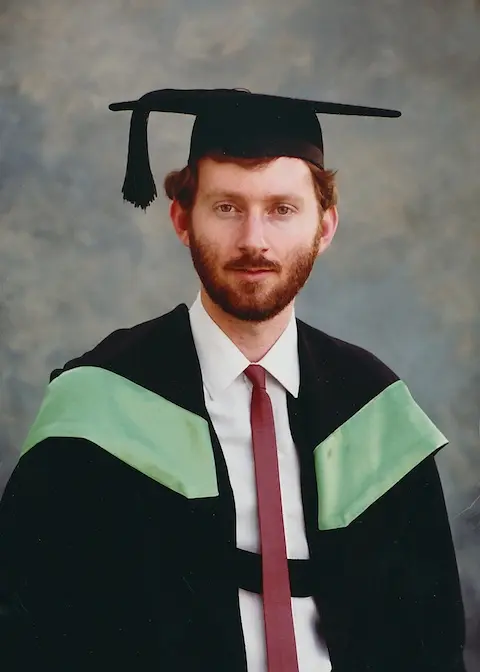
My Photography Background
Developing Amazon AWS Technology Skills
l a u r e n c e s h a w
p h o t o g r a p h y & w e b s i t e s
a w s l i n u x s o l u t i o n s
w o r d p r e s s & e m a i l


photographybyshaw logo (click to view)
venus crossing the sun 6/6/2012